
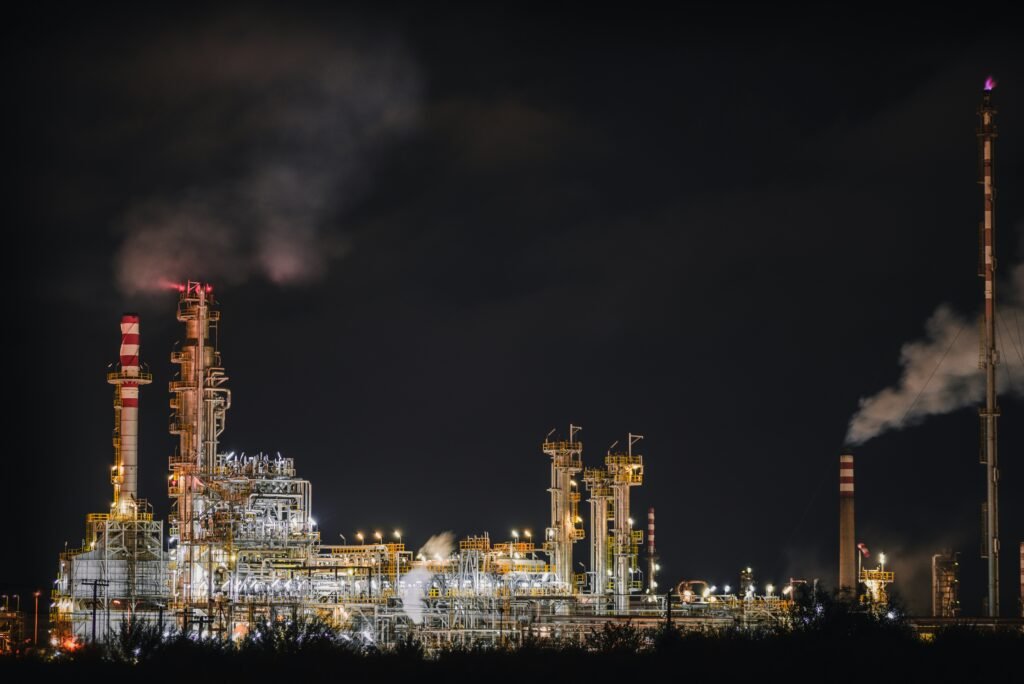
WASHINGTON — Former President Donald Trump announced plans for a major US oil refinery project in Texas that will receive financial backing from India’s Reliance Industries, a development that has drawn attention across global energy markets and within the United States’ refining sector.
The refinery is planned near Brownsville along the Texas Gulf Coast, an area that already serves as one of the most important hubs for energy production and refining infrastructure in North America. The proposed facility is expected to strengthen domestic refining capacity and expand the ability of the United States to process crude oil into fuels such as gasoline, diesel, and jet fuel.
According to NDTV, the refinery project will be developed by America First Refining with financial backing from Reliance Industries, one of the world’s largest energy and petrochemical companies. Reports indicate that the refinery could process approximately 168,000 barrels of crude oil per day once operational, placing it among mid-sized refining facilities in the United States.
Industry observers say the project has attracted attention because entirely new refinery construction in the United States has been uncommon in recent decades. Most energy companies have focused on expanding or modernizing existing facilities rather than building new refineries from the ground up.
Energy infrastructure projects of this scale typically require extensive planning and regulatory approvals. Developers must obtain environmental permits, meet federal and state compliance requirements, and secure financial backing before construction can begin. These processes can take several years depending on project complexity.
The Texas Gulf Coast remains one of the most active energy corridors in the world. Refineries in the region process crude oil from domestic production areas as well as imported supplies, producing fuels that support transportation systems, aviation, manufacturing, and global export markets.
The Brownsville location offers logistical advantages because of its proximity to Gulf Coast shipping routes. Tankers carrying crude oil can access the port while refined petroleum products can be exported to international markets through maritime transport networks.
The involvement of Reliance Industries has also highlighted the role of international investment in U.S. energy infrastructure. Reliance operates major refining complexes in India and has experience managing large-scale petroleum processing facilities.
According to Reuters, the proposed refinery would process roughly 168,000 barrels of crude oil per day if construction proceeds as planned. Reuters reported that the project could become the first newly built large refinery in the United States in about five decades.
The rarity of new refinery construction reflects the high costs and regulatory requirements involved in such projects. Many of the country’s existing refineries were built decades ago and have since been expanded or upgraded rather than replaced.
Energy analysts often note that modern refineries require advanced technology to meet environmental standards and operational efficiency goals. Building a new refinery involves designing complex processing units capable of converting crude oil into a range of refined petroleum products.
Reports also indicate that the project would strengthen the role of the Gulf Coast as a global center for petroleum refining and export activity. Several major pipeline systems and crude oil production areas connect to refineries in the region, enabling large-scale fuel distribution.
According to Bloomberg, the refinery proposal highlights renewed investment interest in refining capacity within the United States. Bloomberg reported that the participation of Reliance Industries reflects international confidence in the U.S. energy market and its long-term infrastructure potential.
If the refinery moves forward, it could contribute to regional economic activity through construction jobs, engineering contracts, and supply chain services during the development phase. Large refinery construction projects typically involve thousands of workers and multiple industrial contractors.
The project is still expected to undergo regulatory review before construction begins. Large industrial facilities must comply with environmental regulations related to emissions, water usage, and land development before receiving approval to proceed.
Energy industry participants will closely monitor the progress of the Brownsville refinery proposal as it advances through planning and regulatory stages. Projects of this scale often take several years from initial announcement to full operational status.
The announcement of the Texas refinery plan highlights the continued importance of refining infrastructure within the United States’ broader energy system. As global demand for petroleum products remains steady, investments in refining capacity remain a key component of energy supply chains.
The proposed refinery also demonstrates how international partnerships continue to play a role in major U.S. industrial developments. With support from global energy companies and strategic positioning along the Gulf Coast, the project has drawn significant attention within the energy sector.
Frequently Asked Questions
What is the US oil refinery project announced in Texas?
The project is a proposed refinery planned near Brownsville, Texas that aims to process crude oil into refined fuels such as gasoline, diesel, and jet fuel.
Who is backing the refinery financially?
The project is supported by investment from Reliance Industries, one of the world’s largest energy and petrochemical companies.
How much oil will the refinery process?
Reports indicate the refinery is expected to process approximately 168,000 barrels of crude oil per day once operational.
Why is the refinery project significant?
It is notable because it could become the first newly constructed major oil refinery in the United States in about fifty years.
Where will the refinery be located?
The refinery is planned for Brownsville, Texas, along the Gulf Coast, a region that hosts a large concentration of U.S. refining and energy infrastructure.