
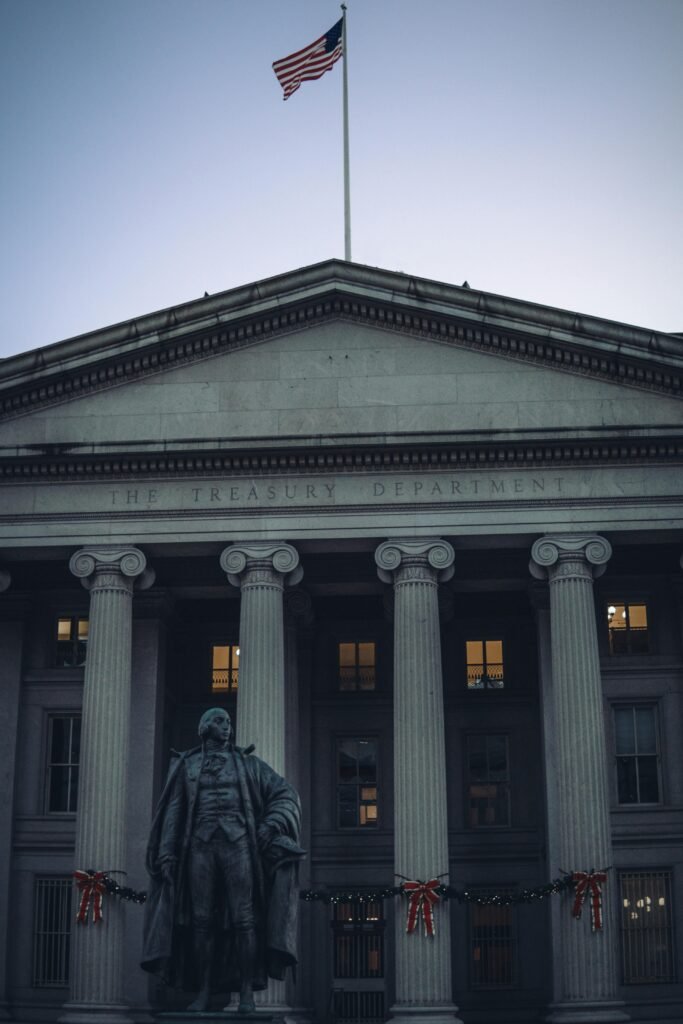
Two delegations sat down at the State Department this morning. One Lebanese, led by Simon Karam. One Israeli, led by Ron Dermer. Two days, five tracks, one ticking clock. The ceasefire that has technically been in place since April 23 expires in days, and what happens between now and Friday at this table will determine whether the southern Lebanon-northern Israel border becomes a peace zone or a war zone for the rest of 2026.
Trump is in Beijing. Marco Rubio is also out of the room this time. The US facilitator role falls to a State Department working group, which is a deliberate signal. Washington wants Lebanon and Israel to own this. Or, depending on who you ask, the White House does not want to absorb a failed third round on its watch.
Why These Talks Exist At All
For most of the last decade, Lebanon and Israel were locked in a frozen conflict shaped by Hezbollah’s military weight and Israel’s strategic patience. Direct talks were politically toxic on both sides. Hezbollah refused recognition, Israel refused concessions on land claims, and the Blue Line UN-monitored border continued absorbing periodic exchanges of fire.
What changed was the Iran war. With Tehran consumed by its own existential crisis, Hezbollah lost the steady weapons pipeline, financial support, and political cover that made its hard line sustainable. The 2026 Lebanese government, led by a pragmatic prime minister with no Hezbollah affiliation, decided it had a six-month window to lock in border security and Israeli withdrawal commitments before either Iran rearmed or the next regional crisis erupted.
The Israelis read the same window and decided they wanted out of Lebanon faster than they wanted leverage. The first round, in March, was a confidence-building exercise. The second round, on April 23, produced the 10-day truce. This week is supposed to produce a framework.
What Is Actually On The Table
Five tracks. None of them simple.
First, full Israeli withdrawal from southern Lebanon. The IDF still holds territory east of the Litani River that it took during the October 2024 escalation. Lebanon wants every inch back. Israel wants security guarantees that Hezbollah will not reconstitute in those positions.
Second, border delineation. The Blue Line is a UN construct, not an internationally recognized border. Both governments want to convert it into a formal, surveyed boundary. That sounds technical until you remember it involves disputed villages, mineral rights, and offshore gas reserves.
Third, prisoner exchange. Lebanon wants the release of approximately 47 detainees held in Israeli facilities. Israel wants information on three soldiers presumed dead since 2024, plus the remains returned. The math is painful but doable.
Fourth, displaced-persons return. Roughly 90,000 Lebanese remain displaced from the southern villages. Israel insists on a Hezbollah-free return, meaning verifiable confirmation that returning civilians are not Hezbollah operatives. Lebanon insists that requirement violates basic human-rights norms.
Fifth, reconstruction. Lebanon is broke. Israel is not paying. The talks include a working group on what international donors will fund, under what conditions, and with what oversight to keep the money out of Hezbollah hands.

Who Simon Karam Is And Why It Matters
The Lebanese delegation lead this round, Simon Karam, is a career diplomat with deep US contacts and zero Hezbollah ties. That is itself a statement. Beirut sent its most pro-Western, English-fluent, technocratic negotiator to Washington. Hezbollah’s political wing, which still holds parliamentary seats, has not publicly opposed Karam’s selection. That tells you the internal Lebanese politics are quietly shifting in a way that would have been unimaginable two years ago.
Karam’s brief is narrow but ambitious. Lock in Israeli withdrawal, secure reconstruction funding, and avoid handing Israel any concession that domestic Lebanese opposition can use as a weapon in the next election. The Israeli side knows this, and US facilitators have reportedly asked Dermer to keep public demands minimal. Whatever Israel wants, it gets in writing, not in headlines.
What Ron Dermer Brings From The Israeli Side
Dermer is the heaviest hitter Netanyahu has. Former ambassador to Washington, fluent in the US political and media ecosystem, and personally trusted by both the Israeli prime minister and the Trump White House. He is also, by reputation, one of the toughest negotiators in the region. The fact that Dermer is in the room signals Israel is serious. It also signals Israel wants a final agreement, not another round.
Dermer’s main constraint is Netanyahu’s domestic coalition. The far-right partners in the Israeli government, particularly Ben-Gvir’s faction, have been loudly opposed to any concession on southern Lebanon territory. If Dermer comes home with too generous a deal, the coalition could fracture. If he comes home empty, the international goodwill from a deal evaporates. He is threading a real political needle, in real time.
What The Ceasefire Expiring Actually Means
Here is where the urgency lives. The April 16 ceasefire was always temporary, designed as a 10-day pressure release. It was extended once and is now scheduled to lapse without explicit renewal. If these talks produce no framework, the technical default is a return to active hostilities. Israeli airpower would resume strikes on southern Lebanon. Hezbollah, weakened but not dismantled, would respond with what rockets it still has and what political cover it can extract from regional partners.
Neither side wants that. The economics of another war round, the diplomatic costs, and the genuinely promising window for a real settlement all point toward extending. But neither-side-wants-war is also how most regional wars have started. US negotiators have been pushing Israel to take de-escalation steps before today’s talks, including holding back on overnight strikes that had become routine. That request was honored. It is the smallest possible building block of trust.
Why This Matters For The US
From Washington’s perspective, a Lebanon-Israel framework agreement would be the first piece of regional infrastructure to outlast the Iran war. The Trump administration needs that. After months of headlines about a war that Iraq’s neighbors are openly hostile toward, a diplomatic win that ties two formal adversaries into a written framework would shift the narrative meaningfully.
It would also create a model. If Lebanon and Israel can negotiate directly, even with massive scar tissue and Hezbollah’s veto-power complicating everything, it weakens the argument that every Middle East conflict requires a regional war to resolve. That matters for the Trump White House, which is trying to project a doctrine of tough negotiation, no nation-building. A working Lebanon-Israel deal is the showcase product for that doctrine. The economic spillovers from regional stability would also start showing up in oil markets, which are still pricing geopolitical risk premium into every barrel.
Why This Matters
For Americans tracking this from a distance, the practical stakes are this. A successful framework keeps Lebanon from collapsing into another civil war or another Iran-proxy state. It keeps Israel from another deployment cycle that drains its reserves and its civilian morale. It keeps the broader Mediterranean region in a place where US naval assets and diplomatic bandwidth can be redeployed toward, you know, the Pacific.
A failed framework does the opposite. More instability, more refugees, more energy-market volatility, and an Iran-proxy network looking for a way back in even from a weakened position. The downside scenario is concrete and ugly.
What To Watch For Friday
Three signals will tell you whether this round is succeeding. First, a joint statement issued by both delegations rather than separate readouts. Joint statements are diplomatic gold. They mean both sides agreed on language, which is harder than it sounds. Second, a specific date for round four. Vague language about continuing the process is bad. A concrete next-meeting date is good. Third, public reaction from Hezbollah and the Israeli far-right coalition. If both groups are unhappy, the deal is probably real. If one group is celebrating, one side gave away too much.
USABlaze Takeaway
I have written about enough Middle East diplomacy to know how often these talks fizzle. The graveyard of regional peace processes is wide and well-tended. But this round has something most have lacked. A Lebanese delegation with internal authority. An Israeli delegation with prime ministerial backing. A ceasefire that nobody wants to lose. And a White House facilitator that is just engaged enough to keep both sides at the table without overplaying its hand.
My read is that round three produces a framework. Not a treaty. Not full peace. A framework with specific commitments on withdrawal, prisoner exchange, and reconstruction, with a fourth round scheduled for late June to finalize details. The path from there to actual signed peace would still take 18 months, but the framework gets us most of the way there.
If I am wrong and these talks collapse, the next 60 days in southern Lebanon and northern Israel get very bad very fast. Watch this one closely.
Sources: US State Department, RTÉ, Al Jazeera, The National, Jerusalem Post.
By The USABlaze Editorial Desk
Related Stories From USABlaze
- Oil Price Today April 17 Crude Oil Prices Fall Below $100 as Israel Lebanon Ceasefire and Iran Talks Ease Market Fears
- Iranian Foreign Minister addresses Supreme Leader status following US Israel Attack on Iran
- US Israel Attack on Iran 2026 Breaking News: Coordinated Airstrikes on Tehran and Iran Military Response
- The $100K AI Jobs Nobody Talks About and They’re Blue Collar