
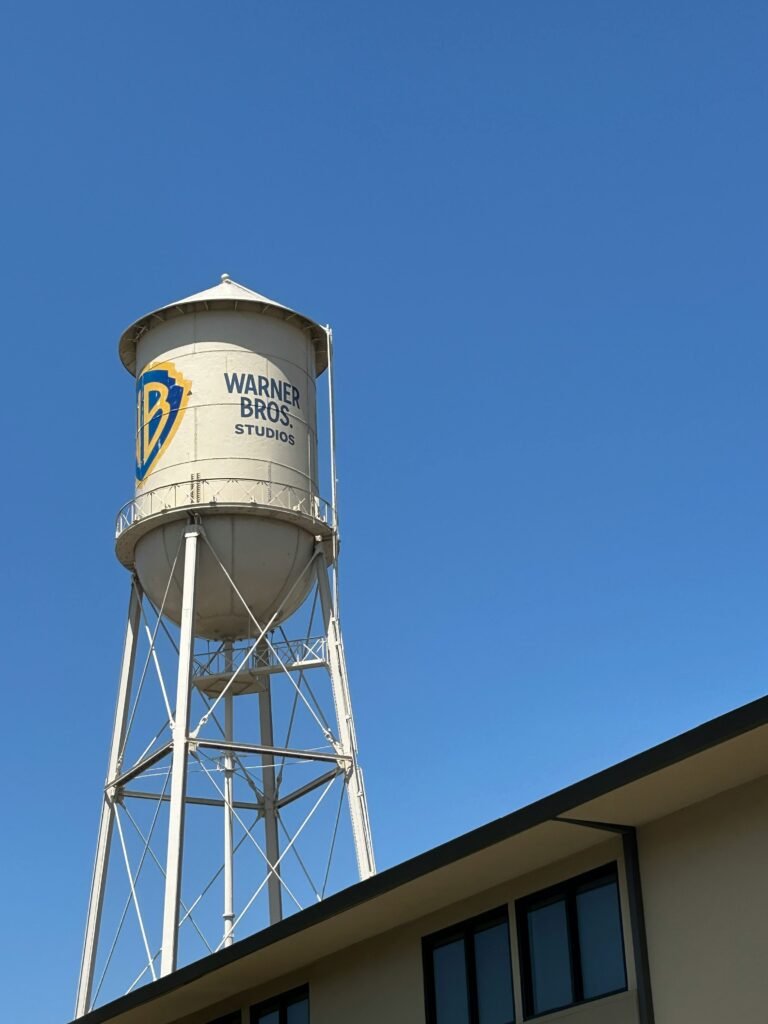
NEW YORK — Paramount Global has submitted a higher offer for Warner Bros. Discovery, intensifying what is shaping into one of the most closely watched corporate contests in the U.S. entertainment sector. The revised proposal has escalated the Warner Bros Paramount takeover battle and raised new questions about the future structure of major Hollywood studios as media companies confront slowing streaming growth, shifting advertising models, and rising production costs.
According to reporting from the Associated Press, Paramount increased its bid to approximately $31 per share, strengthening its position in the competitive process. Warner Bros. Discovery acknowledged that the updated proposal could be considered superior to earlier terms, signaling that negotiations are entering a more decisive phase. Reuters separately reported that Warner Bros. has begun reviewing the enhanced offer under its fiduciary obligations, suggesting that formal evaluation procedures are underway.
The development marks a significant moment in the Warner Bros Paramount takeover discussions, drawing attention across Wall Street and the broader entertainment industry. Investors and analysts are closely monitoring the situation as consolidation becomes a defining strategy for major media groups navigating a rapidly evolving content landscape.
Warner Bros Paramount Takeover Reflects Broader Industry Consolidation
The Warner Bros Paramount takeover effort reflects a larger restructuring wave within the media and entertainment sector. Traditional studios continue to face pressure from declining cable television subscriptions, uneven theatrical recovery, and intensifying competition from global streaming platforms. While box office revenues have improved in certain markets, long-term profitability now depends heavily on digital distribution and scalable content ecosystems.
Paramount’s higher bid is widely viewed as a strategic move to secure premium intellectual property assets. Warner Bros. Discovery controls a vast portfolio of film franchises, television studios, and established global brands. Combining those assets with Paramount’s film studio, streaming platform, and television networks could create one of the most diversified entertainment portfolios in the industry.
Market participants are evaluating how the Warner Bros Paramount takeover could reshape streaming competition. Paramount operates Paramount+, while Warner Bros. Discovery oversees Max and several international platforms. A potential merger could allow unified content licensing strategies, stronger advertising-supported tiers, and improved cost efficiency through shared infrastructure.
Shares of Warner Bros. Discovery experienced moderate movement following confirmation of the revised proposal, reflecting investor expectations of improved valuation. Analysts note that shareholders will likely assess not only the per-share offer but also long-term synergy potential and debt considerations before supporting any final agreement.
The Associated Press reported that Paramount’s enhanced offer strengthens its negotiating leverage amid ongoing discussions. Although detailed financing structures have not been fully disclosed publicly, the increased valuation signals a more assertive corporate strategy aimed at securing scale in a consolidating marketplace.
Reuters noted that Warner Bros. Discovery has indicated it will review the proposal in line with governance obligations. That review could involve consultations with financial advisers, legal teams, and board committees tasked with evaluating shareholder value.
If completed, the Warner Bros Paramount takeover would represent one of the most consequential entertainment mergers in recent years. The combined entity would hold significant influence across film production, scripted television, unscripted programming, sports broadcasting, and digital streaming distribution.
Regulatory scrutiny is expected to play a critical role in determining the outcome. U.S. antitrust authorities have shown increased vigilance toward large media mergers, particularly those affecting content distribution and advertising markets. Any final agreement would likely undergo formal review to assess competitive impact and consumer implications.
From a strategic perspective, Paramount’s willingness to raise its bid underscores the perceived long-term value of Warner Bros.’ brand legacy. Warner Bros. remains one of Hollywood’s most historic studios, with decades of film and television development shaping global entertainment culture. Securing those assets could strengthen Paramount’s competitive positioning against larger streaming competitors.
However, integration risks cannot be overlooked. Media mergers often require consolidation of production divisions, technology systems, marketing teams, and international operations. While cost synergies may improve margins over time, transitional adjustments could temporarily affect operational stability.
The timing of the Warner Bros Paramount takeover discussions also aligns with broader capital discipline trends in the industry. Media companies are facing pressure from investors to balance content spending with profitability. In this environment, large acquisitions must demonstrate clear financial logic and scalable growth potential.
Another key factor involves advertising revenue transformation. Many streaming platforms are expanding ad-supported subscription tiers to diversify income streams. A merged Paramount and Warner Bros. Discovery structure could potentially offer advertisers expanded reach across broadcast networks, cable channels, and digital platforms.
The escalation of bidding activity signals Paramount’s determination to compete assertively in a marketplace defined increasingly by scale and content ownership. The Warner Bros Paramount takeover has therefore evolved into a defining strategic moment for Hollywood’s corporate landscape.
For employees and creative partners, the potential merger introduces both opportunities and operational uncertainty. Expanded capital resources could support larger productions and global releases, yet corporate restructuring often brings organizational changes.
As negotiations continue, stakeholders will monitor official statements, regulatory filings, and shareholder communications for clarity on the next phase. The coming weeks may determine whether discussions lead to a formal agreement or further competitive bidding adjustments.
In conclusion, Paramount’s higher bid has intensified the Warner Bros Paramount takeover process and positioned it as a pivotal development in ongoing media consolidation. While the final outcome remains uncertain, the raised offer highlights the growing importance of scale, intellectual property strength, and strategic alignment in today’s evolving entertainment industry.
Frequently Asked Questions
What is the Warner Bros Paramount takeover about?
It refers to Paramount Global’s effort to acquire Warner Bros. Discovery through an enhanced financial proposal that has intensified negotiations between the two companies.
How much did Paramount raise its offer to?
According to the Associated Press, Paramount increased its offer to approximately $31 per share.
Why is this takeover significant for Hollywood?
A merger would combine major film studios, television networks, and streaming platforms, potentially reshaping industry competition and content distribution strategies.
Will regulators review the deal?
Yes. U.S. antitrust authorities are expected to review any agreement to assess market concentration and competitive impact.
What impact could this have on streaming services?
A combined company could streamline content libraries, expand advertising-supported models, and strengthen global distribution capabilities.