
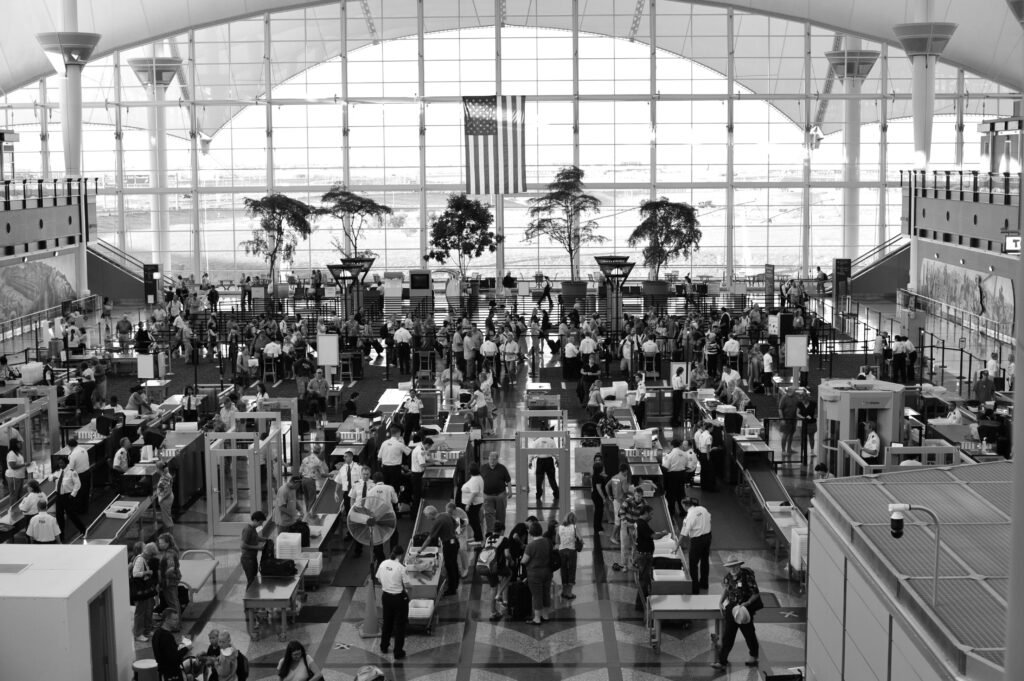
SAN FRANCISCO — March 24, 2026 — US airport delays are becoming a growing concern as mounting strain across airport operations begins to disrupt passenger movement and raise questions about the reliability of air travel in the United States. With a key federal funding deadline approaching, the situation is increasingly viewed as a critical turning point that could significantly impact travel conditions nationwide.
The issue is closely tied to the ongoing partial government shutdown, which has affected multiple federal agencies, including the Transportation Security Administration (TSA). Thousands of TSA officers responsible for airport security screening have continued working without pay. Over time, this has started to affect attendance levels, as financial pressure forces some employees to take leave or seek alternative income sources. According to MarketWatch, March 27 represents a critical point when another missed pay cycle could significantly worsen staffing shortages across major airports.
Major airport hubs including New York, Atlanta, Chicago, and Los Angeles have already begun to show visible operational pressure. Travelers are reporting longer wait times at security checkpoints, especially during peak travel hours when passenger volumes are highest. Airport authorities have started advising passengers to arrive earlier than usual, often recommending additional time beyond standard guidelines to accommodate slower processing speeds.
The disruption highlights how dependent the aviation system is on workforce stability. Airport operations rely on tightly coordinated processes, where each stage from security screening to boarding is interconnected. TSA officers play a central role in maintaining this flow, and even a slight reduction in staffing levels can create bottlenecks that affect the entire system. Unlike other functions, security screening cannot be easily automated or replaced, making it particularly vulnerable during staffing shortages.
As delays at checkpoints increase, airlines are also facing growing challenges. Flight schedules rely on precise timing, and disruptions in passenger flow can delay boarding and departures. This creates a ripple effect, where one delay can impact multiple flights across different routes. Airlines may also incur additional costs due to rescheduling crews, adjusting flight timings, and managing passenger disruptions.
The rise in US airport delays reflects a broader strain across the aviation ecosystem. Airport management teams are deploying additional staff to assist passengers and manage queues, but these measures are limited in their effectiveness when the core issue lies in security staffing. The high volume of travelers further compounds the problem, particularly as demand continues to recover in 2026.
Beyond immediate travel disruptions, the situation carries wider economic implications. Air travel is a critical component of the U.S. economy, supporting industries such as tourism, hospitality, logistics, and business travel. When airport operations slow down, it can affect everything from business productivity to supply chain efficiency. Companies that depend on reliable travel schedules may face delays that disrupt operations and increase costs.
Industry leaders have raised concerns about the potential escalation of the situation if the shutdown continues. In reporting referenced by Reuters, aviation authorities urged policymakers to resolve the funding issue, warning that prolonged disruption could weaken confidence in the U.S. travel system and affect long-term stability.
For passengers, the impact is becoming increasingly noticeable. Travelers may face longer waiting times, missed connections, and last-minute schedule changes. Business travelers may experience disruptions that affect meetings and operations, while families and leisure travelers may encounter additional stress during busy travel periods. These effects highlight how operational challenges translate into real-world inconvenience.
The March 27 deadline is significant not only because of its financial implications but also because of its psychological impact on the workforce. Missing multiple pay cycles can lead to increased absenteeism, as employees face financial pressure. This creates a cycle where reduced staffing leads to increased workload for remaining workers, further intensifying operational strain across airports.
At the same time, the deadline increases pressure on policymakers to reach a resolution. Government funding decisions directly affect essential services, and airports are particularly sensitive due to their scale and complexity. Any disruption in workforce availability can quickly translate into system-wide challenges that affect millions of passengers every day.
Looking ahead, the outcome will depend largely on whether a funding agreement is reached before the situation escalates further. A timely resolution could stabilize staffing levels and improve operational efficiency, although some delays may continue as systems adjust. If the situation persists, disruptions could intensify and extend beyond passenger travel to affect cargo operations and broader economic activity.
Experts note that recovery from such disruptions may take time. Even after staffing levels return to normal, airports may need to clear backlogs, stabilize schedules, and restore operational flow. This means the impact of current disruptions could continue to influence travel conditions even after the March 27 deadline passes.
The US airport delays situation highlights how interconnected infrastructure systems depend on workforce stability and policy decisions. It shows how quickly disruptions in one area can spread across an entire network that millions of people rely on daily for both personal and business travel.
As the deadline approaches, travelers, airlines, airport authorities, and policymakers are closely monitoring developments. The coming days will be critical in determining whether the system stabilizes or faces deeper disruption, with implications for both travel reliability and economic activity.
For readers following ongoing developments across the country, you can explore latest USA news updates for more coverage on national events and public impact.