
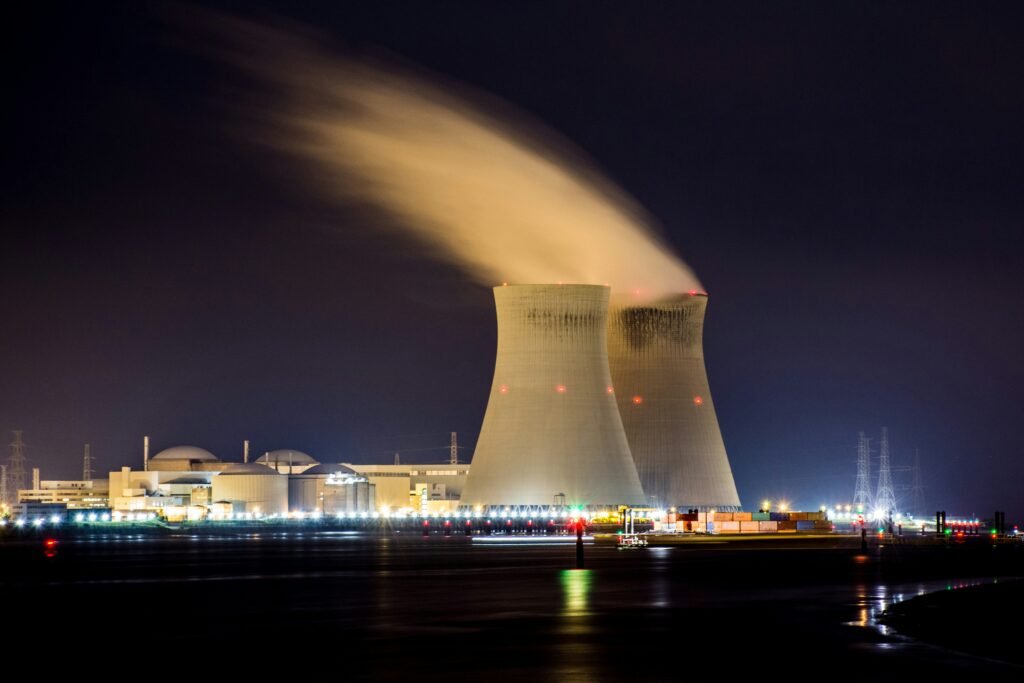
NEW YORK — The violent explosion in uranium stocks this morning is the wake-up call that Wall Street has desperately needed for months. For the last five years the only trade that mattered was buying anything that promised to make code faster or images prettier. You bought the software companies and the cloud providers and you watched your portfolio swell with the inevitability of a rising tide.
That era ended precisely at the opening bell on Wednesday. The capital that fled the software sector during the “SaaSpocalypse” yesterday did not vanish into thin air. It found a new home in the dusty and often despised corners of the energy market.
The Global Uranium and Nuclear ETF ripped ten percent higher in a single trading session. This is the kind of move usually reserved for penny stocks or failing banks. Seeing it happen to a boring commodity sector tells you everything you need to know about the new reality of artificial intelligence. The market has realized that code means nothing if you cannot keep the lights on.
The catalyst for this sudden rotation is the same monster we discussed earlier this week. Project Frontier is not just a new large language model. It is an energy vampire. Leaked internal memos from the deployment team suggest that the compute density required to run Frontier is staggering.
The early benchmarks indicate it draws four hundred percent more electricity than its predecessor GPT-4o. We are not talking about a gradual increase in power consumption. We are witnessing a step change that existing grids simply cannot handle.
The data centers in Northern Virginia are already running hot. The substations are at capacity. When you turn on a machine like Frontier you do not just need more chips. You need consistent baseload power that does not fluctuate with the wind or the sun. You need nuclear energy. The market is pricing in a future where a kilowatt of reliable power is more valuable than a terabyte of data.
The Panic Buy for Baseload Power
Traders on the floor describe the action this morning as a total capitulation of the old tech thesis. Hedge funds that have spent the last decade shorting energy stocks are now scrambling to cover their positions. They are buying everything with exposure to the nuclear fuel cycle.
Cameco and Oklo Inc saw their share prices go vertical as volume poured in from every institutional desk in New York. This is not speculation. This is desperation. These funds have realized that their entire AI thesis is built on a foundation of sand if the power grid fails.
The big tech companies have quietly admitted this for months. Microsoft and Amazon have been signing power purchase agreements for nuclear reactors that have not even been built yet. They know the bottleneck is coming. Today the rest of the market finally figured it out.
The disconnect between the valuation of software companies and the valuation of the energy companies that power them has reached a breaking point. You have software as a service companies trading at fifty times revenue while the utility companies that keep their servers running trade at ten times earnings. That spread is closing fast.
The ten percent move in uranium stocks today is just the first tremor of a massive realignment. Investors are starting to ask hard questions about the feasibility of scaling AI models if electricity costs double or triple in the next few years. The cheap energy that subsidized the first decade of the cloud boom is gone.
The next decade will belong to the companies that own the atoms rather than the bits. You can print more money and you can write more code but you cannot print more uranium.
Why the Grid Can No Longer Keep Up
The physical reality of the electrical grid is something most tech investors have blissfully ignored. They assume that if they build a data center the power company will simply flip a switch and deliver the juice. That is no longer true. The transmission lines in this country are aging and fragile.
The permitting process for new transmission lines takes a decade. Putting a massive AI cluster in a rural area sounds like a good solution until you realize you cannot get the power there. This is why on-site nuclear generation is becoming the holy grail for big tech.
Small modular reactors offer the only viable path to powering these massive facilities without crashing the local grid. The companies that design and build these reactors are suddenly the most strategic assets on the planet. This realization is driving the price action we are seeing today.
It is a recognition that the bottleneck for AI is no longer silicon. We have enough GPUs. We have enough memory. We do not have enough electrons. The price of yellowcake uranium is responding to this structural shortage. It is not just about today. It is about the contracts being signed for delivery in 2028 and 2030.
Utilities are panic buying forward supply because they see the same demand curves that the tech giants see. They know they are going to need every pound of uranium they can get their hands on to meet the projected load growth. This is a seller’s market and the miners hold all the cards.
You can see the supply crunch forming in the data provided by the Cameco market analysis page which shows how long term contracting is stripping the spot market bare.
The End of the Capital Light Era
We are witnessing the death of the capital light investment thesis. For twenty years Wall Street loved businesses that did not need to own anything. They loved software companies because they had high margins and low overhead. You did not need to build factories or dig mines or maintain transmission lines.
You just wrote code and sold subscriptions. That model worked beautifully until the code became so complex that it required a massive physical infrastructure to run. Now the pendulum is swinging back to the capital heavy industries. The companies that own the physical infrastructure are the new kings.
If you own the power plant you get paid. If you own the uranium mine you get paid. If you just own the software you are at the mercy of the people who sell you the electricity. The ten percent surge in uranium stocks today is a warning shot. It is the market telling you that the rules of the game have changed.
The easy money in AI has been made. The next phase of the boom will be harder and grittier and more physical. It will be about concrete and steel and uranium. It will be about digging holes in the ground and splitting atoms.
The investors who understand this shift are going to make a fortune in the coming years. The ones who stick to their old playbooks are going to get left behind. You can see the fear in their eyes today as they watch their software stocks bleed while the energy sector explodes. They know they are on the wrong side of the trade. They know that in a world of infinite data the only thing that matters is finite power.
This rotation is not a one day event. It is the beginning of a supercycle that could last for a decade. The demand for electricity is only going to grow as AI models become more powerful and more ubiquitous. We are building a digital intelligence that consumes energy like a small country. We have to feed the beast.
The only food that packs enough punch is nuclear fuel. That is why the smart money is buying uranium today. They are not betting on a concept or a dream. They are betting on the laws of physics. They are betting that the world will need power and they are betting that the people who own that power will name their price.
The ticker tape does not lie. The green numbers flashing next to the uranium miners are telling you the truth.
A New World Order for Energy Investors
The implications of this shift extend far beyond the stock market. We are talking about national security and geopolitical leverage. The countries that control the uranium supply chain will hold immense power in the coming decades. It is no accident that the United States is rushing to secure domestic sources of nuclear fuel.
The government knows that losing the energy war means losing the AI war. This adds a layer of political support to the uranium thesis that you simply do not find in other sectors. You have bipartisan support for nuclear energy because everyone understands the stakes. This is not about saving the planet anymore. It is about survival.
Investors need to look at the hard numbers coming out of the energy sector. The IEA report on energy and AI clearly outlines the trajectory of demand and it is nothing short of vertical. We are looking at a doubling of data center power consumption in just a few years.
There is no renewable technology that can scale fast enough to meet that demand without battery storage that does not yet exist at scale. Natural gas will play a role but nuclear is the only zero carbon source that provides the density required. This is why the uranium trade is the most asymmetric bet in the market right now.
You have a guaranteed demand shock colliding with a structural supply deficit. The smart money is not waiting for the lights to flicker. They are positioning themselves now for the energy crunch. They are buying the miners and the enrichers and the reactor designers.
They are building a portfolio that is resilient to the volatility of the tech sector because they own the one thing the tech sector cannot live without. The ten percent move today is just the market waking up to this reality. It is the sound of capital moving from the cloud to the ground. It is the sound of the future arriving with a bang. You can ignore it if you want but you do so at your own peril. The energy rotation is real and it is just getting started.