
Air Force One touched down in Beijing on Wednesday afternoon local time. First time an American president has set foot in China on a state visit in almost nine years. The last one was Trump himself, back in November 2017, with that Forbidden City dinner that everyone remembers from the photos.
That he’s the bookend on both ends of the gap says a lot about where US-China relations have been stuck.
This trip is not the 2017 trip though. The world Trump landed in this week is a different planet from the one he left. There’s an active war involving Iran and Israel rattling oil prices. China’s AI industry isn’t playing catch-up anymore. The Taiwan question has moved closer to the front of every defense briefing in Washington. And US consumers have been absorbing the cost of a tariff fight that’s now in its second year.
So the stakes are different. The negotiating leverage is different. The optics are different. Honestly the whole game is different.
What the Trump Beijing Visit Aims to Land
Speaking to reporters before takeoff, Trump said trade is what he’ll be spending most of his time on with Xi Jinping. “More than anything else,” he said. That’s a quote worth paying attention to. The specific asks his team has been telegraphing for the last two weeks:
- A multi-year commitment from China to buy more US soybeans, corn, and pork. The farm-state vote is watching this one with binoculars heading into the 2026 midterms.
- A Boeing aircraft order. Boeing has been struggling for years. A single big Chinese order would give it the biggest customer commitment since 2018.
- Some kind of understanding on rare earth exports. US chipmakers and EV manufacturers need this. Right now China controls roughly 70 percent of global rare earth processing.
In return, Beijing wants tariff relief. They also want a quieter US position on Taiwan, though that one’s a longer shot. Both sides have been doing the classic pre-summit dance of lowering expectations in public, which usually means they actually want to land something behind closed doors.
Who’s on the Plane
This was the part that caught my eye when the delegation list dropped.
Trump brought Apple’s Tim Cook. He brought Tesla and xAI CEO Elon Musk. He brought more than a dozen other corporate heavyweights. Cook makes sense. Apple’s manufacturing exposure in China is the single biggest geopolitical risk on Apple’s balance sheet. The guy probably negotiates with Chinese officials more than US senators.
Musk is the more interesting pick.
Tesla’s Shanghai gigafactory is its biggest export hub in the world. XAI is racing OpenAI for compute supply. And remember from the last article we ran, Musk is currently in the middle of a federal lawsuit against OpenAI. The man is fighting on three fronts at once and he still cleared his schedule for this.
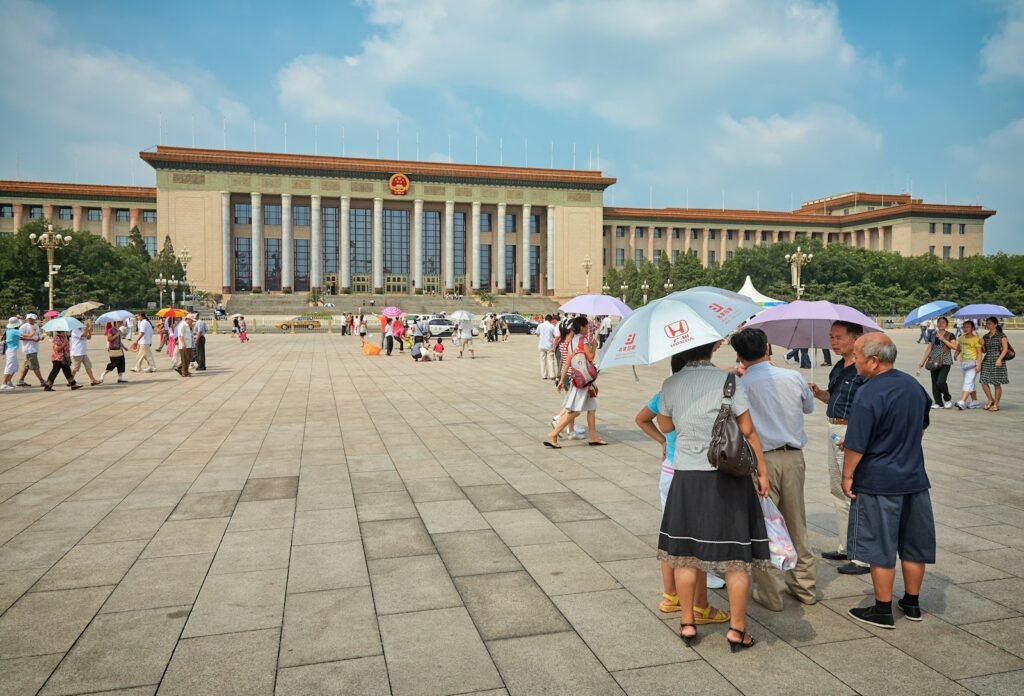
On the tarmac, Trump was greeted by Chinese Vice President Han Zheng. Same Xi envoy who showed up at Trump’s January 2025 inauguration. A deliberate symbolic match. The state dinner is Thursday evening at the Great Hall of the People.
The Iran Question Nobody’s Sure About
Here’s where things get spicy.
Trump told reporters on the way over that he doesn’t need Xi’s help to wrap up the war between Iran and Israel. That’s a striking line because oil traders had been pricing in some level of Chinese diplomatic involvement. China is Iran’s largest oil customer. Beijing has leverage in Tehran that Washington doesn’t and never will (we broke down the collapse of the US-Iran talks a few weeks back, which is the backdrop to all of this).
If Trump and Xi find common ground on a Strait of Hormuz protocol, even an informal one, oil futures could move 5 to 8 percent by Friday morning. If they don’t, expect energy markets to stay jumpy through the weekend.
My read: Trump is publicly downplaying so he doesn’t appear to need Xi for anything. Privately, the Iran conversation is probably the most consequential one happening Thursday.
Why This Matters for Americans
The everyday effects of this summit, for people not watching CNBC every morning, land in three places.
Your grocery bill. If a soybean and pork deal gets signed, farm income in the Midwest goes up. Historically, that softens domestic food prices within two quarters. You’d see it at the supermarket by late summer.
Your gas tank. Any signal of de-escalation on Iran knocks 8 to 15 cents off a gallon of regular gas. Any signal of escalation does the opposite. This is the most direct, fastest transmission belt between this summit and your wallet.
Your phone, laptop, and EV. Whatever Trump and Xi agree on for rare earths and chip export controls flows directly into what your next iPhone or Tesla costs by the holidays. Not a small effect.
Politically, the Trump Beijing visit is high-risk. A clean win shores up his economic narrative going into the midterms and pairs well with his other big move this year, the $1.5 trillion defense budget. A clean loss, or worse a moment where Xi looks like he got the better of him, hands his opponents a ready-made attack line.
What to Actually Watch For
The joint statement, expected late Thursday or Friday Beijing time, is the document that matters. Forget the photo ops. Read the statement. Three specific things to look for:
- Numbers, not principles. “Both sides commit to expanded agricultural cooperation” means nothing. “China to import 30 million tons of US soybeans annually for three years” means a lot. Look for numbers.
- The Taiwan language. Any softening of the standard US “status quo” phrasing is a major story by itself, regardless of what else gets signed.
- What’s missing. If chip export controls aren’t mentioned anywhere in the joint statement, that’s by design. And it’s probably the most consequential omission either side could make.
Why This Matters
For Americans tracking national news, Trump’s Beijing visit is more than a diplomatic photo op or a chance for cable news to fill three news cycles. It’s the first real test of whether the US and China can step back from the trade and tech standoff that’s defined the last eight years. Or whether they’re going to manage it indefinitely as a permanent feature of global commerce.
The downstream effects show up in supply chains, in prices, in the 2026 election cycle, all within months not years. This is one of those visits historians look back on and either say “that was the inflection point” or “nothing came of it.” We don’t know which one yet. By Friday we’ll know more.
USABlaze Takeaway
Don’t read this visit as settled until the joint statement is in writing. And honestly, even then, watch what each side actually does over the next 60 days. Past Trump-Xi summits have produced photogenic agreements that quietly unraveled within a quarter. The 2017 trip is exhibit A.
We’ll be tracking the deliverables, the silences, and the body language. Updating readers as the actual numbers come in. The most interesting follow-ups, in our experience, come from the people not yet quoted in the original coverage. We’ll find them.
Bookmark this page if you want our breakdown when the joint statement drops.
Sources: CNBC, Washington Post, CNN, Al Jazeera, Foreign Policy.
By The USABlaze Editorial Desk
Related Stories From USABlaze
- A New Poll Says Trumps Approval Is Dragging the Whole GOP Toward the Midterms
- $1 Billion White House Security: Inside the Senate Fight Over Trumps Ballroom
- Trump $1.5 Trillion Defense Budget 2027: Full Details, Spending Breakdown and Economic Impact
- 53–47 Senate Showdown: US Blocks Iran War Powers Resolution, Trump Retains Full Military Authority