
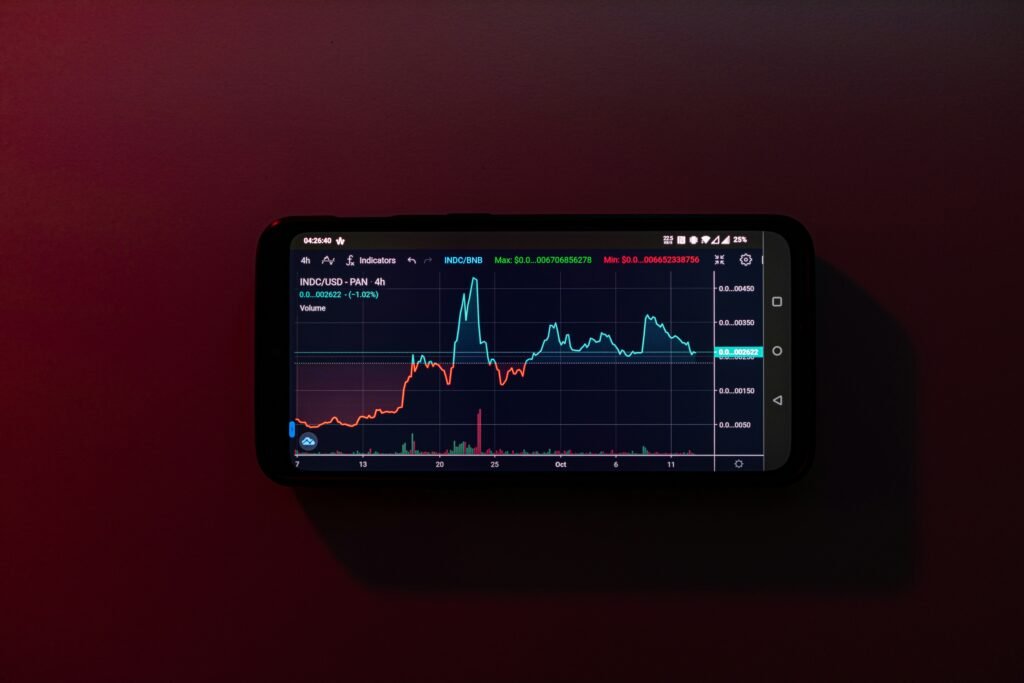
NEW YORK — As Nvidia stock stalls in early 2026, a new reality is setting in on Wall Street. For the past three years, there was only one unshakeable rule: Buy Nvidia, and buy more of it. But as the opening bell rings in February, the engine is sputtering.
But as the opening bell rings in February 2026, the engine is sputtering.
While the broader markets try to find their footing after a volatile January, Nvidia (NVDA) has done something it hasn’t done in years it has stalled. The stock is trading sideways, trapped in a tight, frustrating range while volatility spikes around it. The silence surrounding the stock is deafening, and it has traders asking the question they were too afraid to whisper in 2025: Is the AI bubble finally leaking?
The Hold Rating Heard Round the World
The first crack in the armor appeared mid-January, and it caught the retail crowd completely off guard.
For years, Wall Street analysts have been in a breathless race to see who could slap the highest price target on Jensen Huang’s empire. It became a game of one-upmanship. But on January 12, 2026, the mood shifted. Zacks Investment Research officially downgraded Nvidia from a “Strong Buy” to a neutral “Hold.”
It was a subtle move, but in the hyper-sensitive world of algorithmic trading, it was a thunderclap. The downgrade wasn’t based on a bad earnings report or a failed product launch. It was based on something far more terrifying for a growth stock: Valuation exhaustion. The report suggested that the easy money has already been made and that the astronomical growth rates priced into the stock are becoming mathematically impossible to sustain.
You can feel the hesitation on the trading floor. In 2024 and 2025, any dip in Nvidia’s price was devoured by retail investors in seconds. In February 2026, those dips are lingering. The “Buy the Dip” crowd is running out of ammo, or worse, they are losing faith.
The 120 Billion Dollar AI Debt Bomb
While retail traders worry about price charts, institutional investors are looking at a much darker structural problem hiding in the plumbing of the financial system.
A shocking new economic survey has flagged a massive risk hiding in plain sight: The “AI Debt Bomb.”
According to recent financial stability reports, there is approximately $120 billion in off-balance sheet financing currently propping up the AI infrastructure boom. This is money borrowed by “Special Purpose Vehicles” (SPVs) to build massive data centers and buy Nvidia chips.
Here is the problem: This debt does not show up directly on the balance sheets of the big tech giants. It is hidden in shadow banking structures. This is exactly the kind of financial engineering that preceded the 2008 crash. The fear is that if AI revenue doesn’t materialize fast enough to service this debt, these SPVs could start defaulting.
If that happens, it triggers a cascade of credit events that would make the “Dot Com” burst look like a mild correction. The market is realizing that Nvidia’s record-breaking revenue is actually someone else’s record-breaking debt. And if the lenders get nervous, the orders for new Blackwell chips could dry up overnight.
The Show Me The Money Phase
The core of the anxiety in 2026 comes down to one simple acronym: ROI (Return on Investment).
For the last two years, companies like Microsoft, Meta, and Google have spent hundreds of billions of dollars hoarding Nvidia GPUs like they were gold bars. They told investors that this spending would result in a new industrial revolution. They promised that AI would change everything.
But we are now in 2026, and Wall Street is demanding to see the receipts.
Where are the profits? Sure, ChatGPT and Gemini are impressive, and yes, “Agentic AI” is the new buzzword. But are these tools generating enough new cash to justify the trillion-dollar infrastructure build-out?
The early data for Q1 2026 is mixed at best. Software companies are seeing efficiency gains, but they aren’t seeing the explosive revenue growth that was promised. If the end-users (corporations and consumers) aren’t paying a premium for AI features, then the tech giants can’t keep buying chips at the current pace. We are moving from the “hype phase” to the “show me phase,” and Nvidia is the one with the most to lose if the numbers don’t add up.
The Rise of Custom Silicon Competition
To make matters worse, Nvidia’s biggest customers are actively trying to kill their dependence on the company.
Amazon, Google, and Microsoft have all accelerated the deployment of their own custom AI chips in 2026. These chips aren’t as powerful as Nvidia’s flagship Blackwell processors, but they don’t need to be. They just need to be “good enough” for 80% of the workload and they are significantly cheaper.
Every time Amazon runs a query on its own “Trainium” chip instead of an Nvidia H100, Nvidia loses a recurring revenue stream. In 2024, Nvidia had a monopoly. In 2026, they have competition. And in capitalism, competition always crushes margins. The moat is shrinking, and Wall Street knows it.
The Insider Selling Red Flag
Perhaps the most unsettling signal for the average investor is what the executives are doing with their own money.
Over the last six months, insider selling at Nvidia has accelerated. While it is normal for executives to diversify, the sheer volume of stock being offloaded by upper management in late 2025 and early 2026 has raised eyebrows.
When the people running the company are selling shares while telling you to buy them, it creates a crisis of confidence. It suggests that they believe the stock price has reached a peak that won’t be seen again for a long time. Retail investors, who often follow the lead of insiders, are seeing these filings and getting nervous.
The Psychology of the Bag Holder
This brings us to the psychological state of the market. In 2026, we are seeing the classic signs of “Bag Holder Anxiety.”
Many retail investors bought into Nvidia late in the game, purchasing shares near the all-time highs of late 2025. Now that the stock is stalling, they are trapped. They are too afraid to sell and take a loss, but they are terrified that a crash is coming.
This creates a “heavy” market. Every time the stock tries to rally, these trapped investors sell to get their money back, pushing the price back down. This is why Nvidia has been stuck in a sideways pattern for weeks. It is working through a massive overhang of regret.
The Verdict for Investors
So, is the party over?
Not necessarily. Nvidia is still a titan. They are still the smartest guys in the room, and their hardware is still the gold standard for high-end training. The AI revolution is real, and it is not going away.
But the days of the stock doubling every six months are likely gone forever. The stalling stock price in early 2026 is a signal. The market is taking a breath. It is re-evaluating the risk. The “fear of missing out” (FOMO) has been replaced by the “fear of holding the bag.”
If you are holding Nvidia, this doesn’t mean you panic sell. But it does mean you need to stop looking at 2023 charts and start looking at 2026 realities. The easy ride is over. The volatility is back. And for the first time in a long time, Wall Street isn’t just looking at the stars it is looking down at the ground, wondering if there is any solid floor left beneath its feet.