
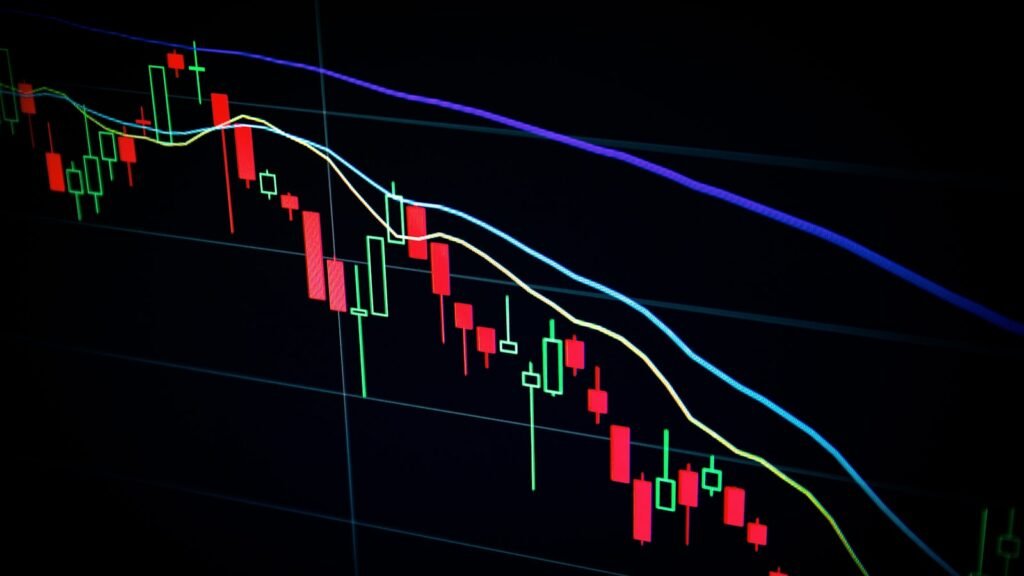
If you bought Marvell Technology on the announcement that it was joining the S&P 500, June 22 was a painful day. The stock fell nearly 4 percent on the exact day it officially entered the most-watched benchmark in American finance.
This is not a story about something going wrong. It is a story about a pattern as old as index inclusion, playing out with new precision inside the AI-driven market mania of 2026.
What Actually Happened on June 22
Per TradingKey, Marvell Technology moved down by 3.9 percent on its first official trading day as an S&P 500 member. The session featured significant intraday volatility. A stock that had spent months flying on AI infrastructure enthusiasm gave back ground on the day that was supposed to celebrate its arrival.
Per TIKR, Marvell is up around 260 to 265 percent in 2026. Those numbers did not change on June 22. What changed was the composition of buyers and sellers, and that shift explains everything.
Why Inclusion Works Against Latecomers
When S&P 500 index funds learn a new stock is joining the benchmark, they are required to buy it to match the index. That mechanical demand is real. Per CNBC, Marvell was announced as joining the S&P 500 alongside Flex, replacing Pool Corp and Campbell’s, on June 5.
From that announcement to June 22, institutional traders and momentum players front-ran the inclusion by buying aggressively in anticipation of forced index fund demand. By the time June 22 arrived, most of the mechanical buying had already happened. The demand that was supposed to arrive on day one had been pulled forward by weeks. On the actual day, sellers who had bought the rumor were selling the news.
Sell the News as a Market Reflex
Buy the rumor, sell the news is one of the oldest reliable patterns in equity markets. Traders who bought on the inclusion announcement took profits the moment the event actually happened, because the event was now priced in and there was no more anticipation left to monetize.
What makes Marvell a particularly sharp version of this pattern is the scale of the run preceding it. A stock up 260 percent in one year is pricing in not just good news but near-perfect execution for years to come. When that much optimism is already in the price, it takes almost nothing to trigger a round of profit-taking.
What Marvell Actually Does
The underlying business is worth understanding because it is real. Marvell makes the networking chips and custom silicon that allow AI data centers to move data between processors at the speeds modern AI workloads require. As more AI chips go into data centers, the demand for high-bandwidth networking to connect them grows with it. The company recently reported shipping over five million photonic chips ahead of its S&P 500 entry. That is real product and real revenue.
The question is whether the price already reflects everything that could go right for years forward. At 260 percent in a single year, the market has done a substantial amount of forward forecasting. Per Yahoo Finance, AI stock mania has taken over markets in 2026, with gains concentrated in a small number of companies at historically elevated valuations.
The Russell Bounce That Followed
The session after Marvell’s rough June 22, the small-cap Russell 2000 led markets higher, up more than 2 percent. That rotation from mega-cap AI names into smaller companies that had been left behind is a useful signal. It suggests investors are not abandoning the bull run. They are sorting within it, taking some gains from the largest winners and deploying them into segments that have not participated as fully.
That is healthy market behavior. It is also a sign that the AI trade is maturing from a rising-tide phase into a phase that requires more discriminating stock selection.
What Passive Investors Should Know
If you own an S&P 500 index fund, you now own Marvell. You also own the AI trade whether you chose it or not. The concentration of the S&P 500 in technology and AI-related companies has grown significantly over the past two years. Passive investors who believe they own a diversified slice of the American economy own a meaningful slice of the AI bet. That is fine to hold. It is worth understanding.
Per MarketWise, tech stocks are giving mixed signals in June about whether the AI bull run rests on durable fundamentals or stretched valuations. The Marvell inclusion day selloff is one of those mixed signals.
Why This Matters
Marvell joining the S&P 500 is a milestone for the AI infrastructure investment cycle. A chipmaker known primarily to semiconductor professionals a few years ago is now in the benchmark that defines American equity investing. That is how much the AI trade has reshaped the market in a short period of time.
The first-day selloff is a reminder that even genuine business success, real products, real revenue, real growth, can result in a down session if the price already reflected too much of it. The story of Marvell is not over. Its first day in the index just told you that the market has done a lot of the work already, and the next phase requires actual results to justify current prices.
The USABlaze Takeaway
Three things to hold onto.
One, the fall was the pattern, not a warning signal. Selling on inclusion day after weeks of front-running is textbook. The company’s business is not broken.
Two, the AI trade is repricing, not reversing. The Russell bounce shows rotation inside a continuing bull run. The market is sorting winners, not exiting.
Three, passive investors own the AI bet now. Marvell in the S&P 500 is a reminder that your index fund is more concentrated in AI-related companies than it used to be. Know what you hold.
Marvell had one of the best years of any stock in the market, then had a bad first day in the most important index in the market. Both of those things are true simultaneously. That is the kind of complexity markets live in all the time, whether the headlines explain it or not.
Sources: TradingKey, TIKR, CNBC, Yahoo Finance, MarketWise.
By The USABlaze Editorial Desk
Related Stories From USABlaze
- Stock Market May 15 2026: Warshs First Day, Powells Last, Hot PPI
- Stock Market Today May 14 2026: Chip Rotation as Intel AMD Soar
- Stock Market Today May 13 2026: Why PPI Inflation Spiked 6%
- Iran War Global Economic Impact 2026 7 Warning Signs of Oil Price Surge Inflation Crisis and Stock Market Volatility