
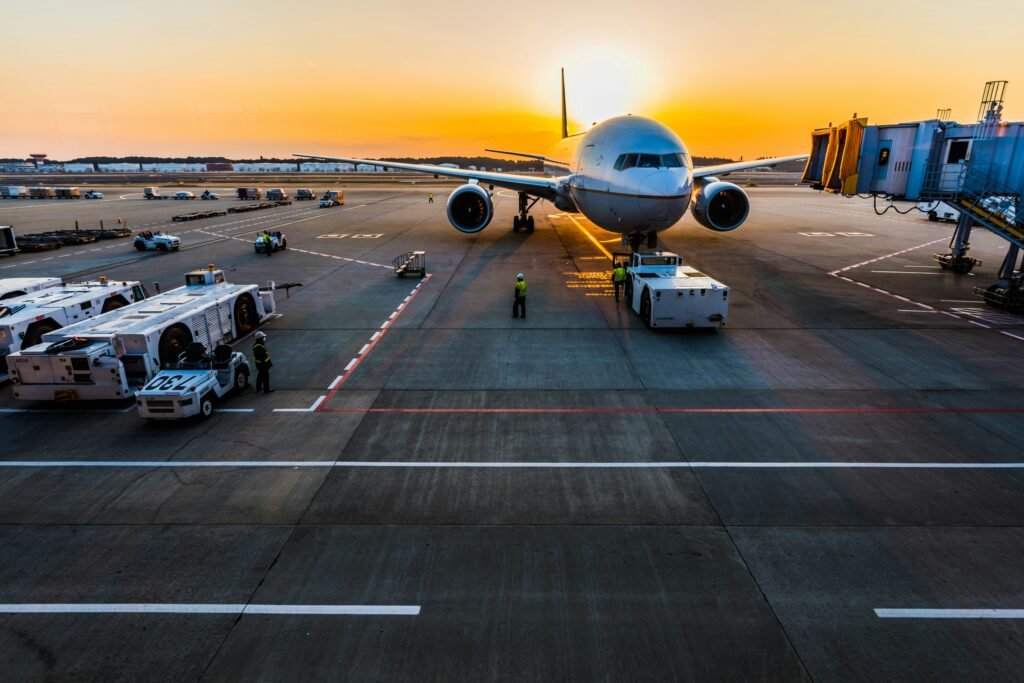
CHICAGO The departure boards at O’Hare International Airport turned into a sea of red text today as a sudden wave of flight cancellations stranded thousands of passengers. What started as a normal Tuesday morning quickly descended into chaos for travelers trying to head south. The disruptions rippled through the terminals and left families sleeping on their luggage while business travelers scrambled to find the last empty seats on later flights. The source of the trouble was not a snowstorm or a mechanical failure. It was a sudden closure of airspace thousands of miles away in the Caribbean.
Airport officials confirmed that federal aviation authorities had issued temporary restrictions for flight paths cutting through the Caribbean Sea. This is a critical corridor for flights leaving Chicago for destinations in Florida and South America and the islands. When that airspace was locked down the airlines had no choice but to ground their planes. The decision was made instantly and it caught the entire aviation network off guard. Pilots were told to stay at the gate and passengers were told to get off the planes.
The Ripple Effect on the Grid
Aviation experts call this a cascading failure. When a major hub like O’Hare loses a block of flights it does not just affect the people in Chicago. It messes up the entire national schedule. The planes that were supposed to fly to Miami or San Juan were also scheduled to turn around and fly back to Denver or New York later in the day. When the first leg of the journey gets cut the rest of the day falls apart. We saw this happen in real time today as the delay map spread across the country.
Major carriers including United Airlines and American Airlines were forced to park dozens of jets on the tarmac. This created a logistical nightmare for the ground crews. There were simply not enough open gates to handle the traffic. Incoming flights had to wait on the taxiways for hours because there was nowhere to park. The frustration inside the cabins was palpable as pilots tried to explain a geopolitical situation to passengers who just wanted to get home.
The Scene Inside the Terminals
Inside Terminal One and Terminal Three the lines for customer service stretched down the hallways. The mood was tense. Travelers were glued to their phones refreshing their apps in the hopes of finding a new route. But the empty seats were disappearing fast. The few flights that did manage to take off were completely full. For many people the cancellation meant spending the night in a hotel near the airport or trying to sleep on the hard floor near the gate.
One family from Wisconsin said they arrived three hours early for their vacation flight only to watch it vanish from the screen five minutes before boarding. They were told the earliest they could fly out was two days from now. This is the harsh reality of modern air travel. The system is so efficient and so packed that there is zero slack when things go wrong. A single airspace closure can wipe out a family vacation before it even begins.
Safety First and Questions Later
The airlines stated that safety is the only priority in these situations. They work directly with the FAA and military monitors to ensure that civilian aircraft are nowhere near active operations. While the specific details of the Caribbean activity remain vague the response from the carriers was swift. They would rather lose millions of dollars in revenue than risk flying a passenger jet through a hot zone.
Most airlines immediately issued travel waivers. This allows passengers to rebook their flights without paying the usual change fees. However a waiver does not manufacture an empty seat. The problem today was capacity. With hundreds of flights canceled there were simply more bodies than there were seats. The rebooking agents were overwhelmed and the phone lines for the airlines had wait times of over four hours.
The Crew Scheduling Disaster
The hidden problem in all of this is the flight crews. Pilots and flight attendants have strict legal limits on how many hours they can work in a day. When a flight is delayed on the tarmac for three hours the crew might “time out” and become illegal to fly. This happened repeatedly at O’Hare today. Even when the airspace restrictions were lifted later in the afternoon many flights were still canceled because the crews had gone over their duty limits.
Airlines now have to reposition crews to get the network back in sync. A pilot who is stuck in Chicago cannot fly his scheduled route out of Dallas tomorrow morning. This means the pain of today is going to bleed into the schedule for tomorrow and possibly the day after. It takes a massive amount of coordination to reset the board after a disruption of this size.
The Financial Hit for Travelers
Consumer groups are warning passengers to keep every single receipt. While the airlines will rebook you for free they are often hesitant to pay for hotels or meals when the delay is caused by “air traffic control” or “security” issues. These are considered events outside the control of the airline. That means the cost of the disruption lands squarely on the wallet of the traveler.
Travel insurance might help some people recover their losses but for most the only compensation will be a stressful day and a bad night of sleep. The airports are slowly returning to normal operations but the backlog of stranded passengers will take days to clear. For now the departure boards at O’Hare are a grim reminder of how fragile the global travel network really is. A decision made in a control room thousands of miles away can still leave you stranded in Chicago with nowhere to go.