
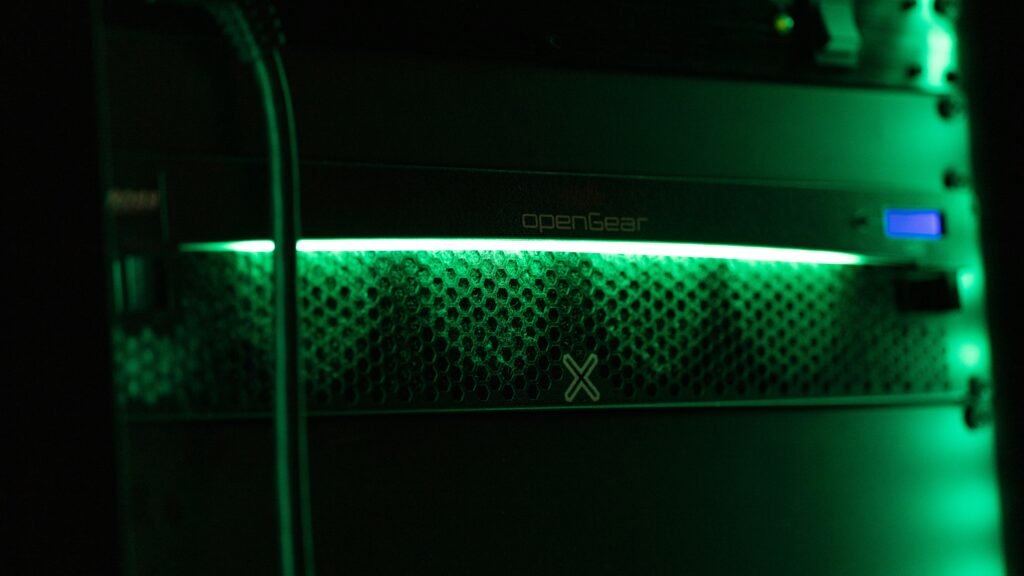
SILICON VALLEY The global technology sector is facing an unprecedented AI Data Center Crisis that threatens to stall the entire artificial intelligence revolution. The temperature inside a modern server aisle is supposed to be a brisk sixty-eight degrees. But walk into many legacy facilities today and you are hit with a wall of heat that feels more like the inside of a furnace.
We have spent the last three years obsessing over large language models and neural weights. We treated artificial intelligence as if it were a purely virtual phenomenon that lived in the cloud. We were wrong. The cloud is not a cloud. It is a building made of concrete and copper and steel. And right now those buildings are failing. A shocking new industry assessment has just landed on the desks of every major CIO in the Valley and the numbers are catastrophic.
The report indicates that we have hit a hard wall. The infrastructure that powers the internet was built for the era of email and streaming video. It was never designed to handle the thermal density of the latest Nvidia Blackwell chips. We are trying to run a Ferrari engine inside a Model T chassis and the wheels are coming off. This is no longer a theoretical problem about future capacity. It is a present crisis that is forcing companies to throttle their most advanced AI deployments because they literally cannot find a plug that works.
The Great Infrastructure Obsolescence Event
The industry term for this phenomenon is the Compute Cliff. It refers to the moment when the power demands of the software exceed the physical capacity of the hardware to deliver it. According to the latest data only twenty percent of the existing data centers in the United States and Europe are currently certified as AI Ready. The vast majority of facilities simply lack the liquid cooling loops and the massive power feeds required to run modern clusters.
You can read the terrifying details of this infrastructure gap in the new industry analysis on data center obsolescence which breaks down exactly why eighty percent of our current server farms are effectively obsolete for the next generation of computing. The problem is simple physics. Traditional air cooling can handle racks that generate ten kilowatts of heat. The new AI racks generate upwards of one hundred kilowatts. If you put that kind of density into a standard data center you will trigger the fire suppression system within minutes.
This reality has triggered a panic in the commercial real estate market. Billions of dollars of data center assets are suddenly being revalued as distressed inventory. These buildings are zombie facilities. They are still operating and the lights are on but they cannot host the only workload that matters for the next decade. Landlords are scrambling to retrofit these sites but you cannot just magically summon three gigawatts of power from a substation that was built in the nineteen eighties.
The grid itself is the ultimate bottleneck. Utility companies are telling tech giants that the wait time for new high voltage transmission lines is now measured in years rather than months. We have Silicon Valley startups raising hundreds of millions of dollars for compute credits that they cannot spend because there is nowhere to put the machines. The capital is there. The chips are there. The electricity is not.
Europe Flees To The Frozen North
The desperation for power is forcing a redrawing of the geopolitical map. Companies are no longer choosing locations based on tax breaks or proximity to customers. They are chasing the electrons. This week provided the starkest example yet of this new migration. Mistral AI is the pride of the European technology sector and the continent’s best hope for competing with OpenAI. They just announced that they are effectively abandoning the central European grid for their most critical infrastructure.
Mistral has committed more than one billion euros to build a massive new AI Factory in Sweden. They are not going there for the scenery. They are going there because the Nordic region is one of the few places left on Earth with an excess of stable hydropower and a climate that provides free cooling for half the year. The deal represents a capitulation to the physics of energy. Paris and Frankfurt simply cannot provide the juice needed to train the next generation of frontier models.
You can find the specifics of this massive relocation in the Telecoms & Infrastructure Report where the details of the 1.2 billion euro investment reveal just how critical energy security has become for AI sovereignty. This is a trend that will accelerate. We are going to see a hollowing out of the traditional tech hubs as the hyperscalers move their most intensive workloads to places like Iceland and Quebec and Norway.
The implications for national security are profound. If you cannot power your own artificial intelligence infrastructure you are effectively a vassal state in the digital age. The United States is lucky to have cheap natural gas and a robust nuclear fleet but even we are straining under the load. Europe is in a far more precarious position. The flight of Mistral to Sweden is a warning shot. It signals that the industrial heartland of Europe is no longer capable of supporting the industrial revolution of the twenty first century.
The Sky Is The Only Way Out
The congestion on the ground is so severe that some investors are now betting that the only solution is to leave the planet entirely. The terrestrial networks that carry data between these overloaded data centers are becoming just as clogged as the power lines that feed them. We are seeing latency spikes and packet loss rates that would have been unacceptable five years ago. The physical internet is creaking under the weight of the virtual intelligence.
This has given rise to a bizarre and desperate new sector of the startup economy. Venture capitalists are now funding companies that promise to bypass the terrestrial grid completely. One of the most fascinating examples is a new satellite compression startup that just raised a seed round led by Long Journey Ventures. The premise is that ground stations are too congested to handle the exabytes of training data that need to move between continents.
These startups are developing new compression algorithms designed specifically for orbital transmission. The idea is to beam the data directly from the sensor to the satellite and then down to a remote data center in the Arctic Circle bypassing the crowded fiber bundles of the Atlantic ocean. It sounds like science fiction but it is actually a rational response to market failure. When the road is blocked you build a plane.
The involvement of Long Journey Ventures is significant. They are known for backing “magically weird” companies that look crazy until they suddenly become essential. Their bet suggests that the infrastructure crisis is not going to be solved by simply laying more cable. We have run out of room in the ground. We have run out of room in the airwaves. We are hitting the hard limits of what our physical environment can support.
The technology industry is currently in a state of denial. We are celebrating the release of smarter agents and more capable models while ignoring the fact that the platform they run on is burning. We are building a skyscraper on a foundation of sand. The “Compute Cliff” is not a prediction. It is a mathematical certainty. Unless we see a Manhattan Project level investment in energy generation and transmission the AI revolution is going to stall out.
The lights are flickering in the server room. The fans are spinning at maximum RPM. The warning alarms are starting to chirp. We have built the most powerful software in human history but we forgot to build the plugs. The next twelve months will determine if we can fix the machine before it overheats permanently. The era of infinite compute is over. The era of energy scarcity has begun. And right now the only thing growing faster than the intelligence of our models is the temperature of the planet that hosts them.