
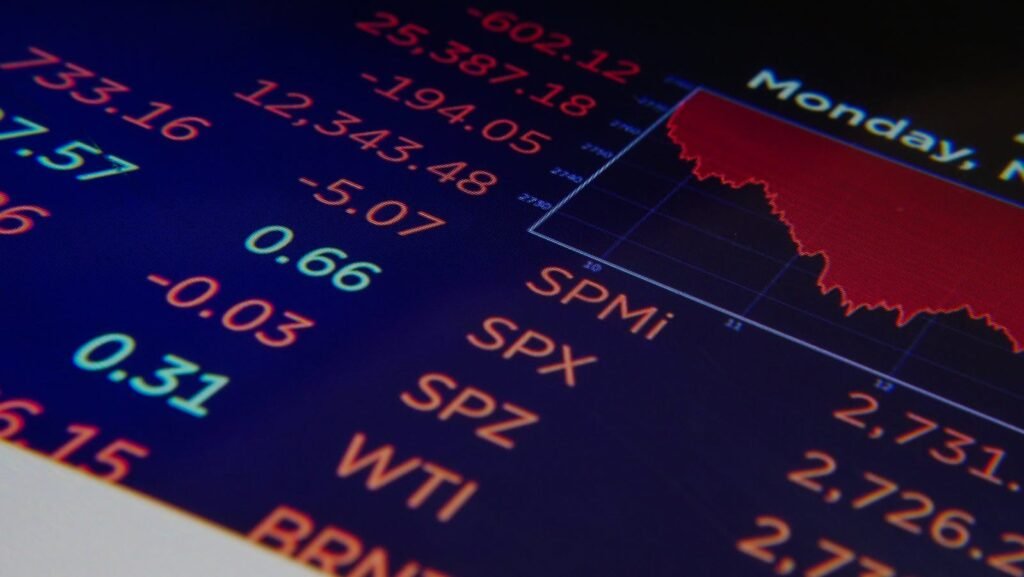
Friday closed ugly. The Dow lost 537 points. The S&P 500 dropped 1.24 percent. The Nasdaq took the worst hit at 1.54 percent. And for the first time in weeks, nobody could pin it on one clean catalyst.
Three forces converged at the same hour. Trump came home from Beijing with no breakthrough. The 10 year Treasury yield punched through to a one year high at 4.55 percent. Oil futures jumped on fresh Strait of Hormuz tension. The market couldn’t shrug off all three at once.
This is the part of every bull market where I start watching the chart with a little more respect. Records on Thursday. Records snapped Friday. The rally hasn’t broken. But it just got tested.
The Closing Numbers
The damage by index, per CNBC’s late session tally:
The S&P 500 finished at 7,408.50, off 92.94 points. The Nasdaq Composite closed at 26,225.14, down 411 points. The Dow Jones Industrial Average ended at 49,526.17, surrendering 537.29 points after briefly retaking 50,000 on Thursday.
That sounds dramatic until you remember the indexes are still pinned within one percent of all time highs. Friday was a hard day, not a crash. But it broke the pattern of buying every dip on the close, which has held since early April.
What Snapped the Tech Trade
The tech damage was where Friday turned from “ugly day” into “warning shot.”
Intel dropped 6 percent. Advanced Micro Devices fell 5.7. Micron Technology gave up 6.6. Nvidia, the company carrying the most weight in the AI narrative, slid 4.4 percent. TheStreet noted that Cerebras Systems, which had jumped 68 percent on its Nasdaq debut Thursday, gave back 10 percent the next session.
This is not a sector rotation. This is the front line of the AI trade absorbing a hit. Every name listed above had been a hero of the past quarter. They all sold off together Friday.
The reason matters: when Treasury yields rise, growth stocks reprice down. AI stocks are growth stocks with extra leverage. Higher yields hit them harder. The math is mechanical.
Why the 10 Year Yield Jumped
The 10 year Treasury note yield rose nine basis points Friday to 4.55 percent. That’s the highest closing yield in a year.
The trigger was inflation expectations, not actual inflation data. Two pieces of news landed together. First, Trump’s Beijing summit ended without a US China framework on Iran sanctions. Second, Trump separately rejected a US Iran de escalation framework that had been floated by European mediators. Both decisions point the same direction: higher oil for longer, more inflation risk, less room for the Fed to cut.
The bond market read it instantly. Yields up. Mortgage rates climbing back toward 6.4 percent earlier in the week didn’t help.
For tech investors, the takeaway is unfortunate. The AI rally has been priced as if rate cuts were coming. Friday’s yield action says they may not be.
Oil Did Its Part
Brent crude futures for July gained 1.49 percent to $107.30 a barrel. WTI for June advanced 1.55 percent to $102.74. The Sunday Guardian summary noted intraday spikes touched $109 on the Iran headlines before easing.
Why this matters for stocks: oil at $107 starts to actually move CPI. Gasoline retail prices follow with a one to two week lag. The Fed sees energy push inflation expectations higher, the Fed gets more hawkish, equities reprice lower. Standard cycle.
The Strait of Hormuz dynamic is the new wild card. Iran has been seizing tankers in or near the Strait at a roughly weekly pace since February. Every incident lifts the option price on a wider closure. Insurance premiums for Persian Gulf shipping are up. Some routes are quietly being avoided.
Oil traders are pricing in scenarios most equity investors aren’t.
The Trump Xi Letdown
Markets had been told the Beijing summit could produce something. Maybe a tariff freeze. Maybe a coordinated China move on Iran. Maybe a phase two trade deal framework.
None of that arrived. Trump flew home Friday afternoon. The joint communique was thin. Xi got the optics of hosting a sitting US president. Trump got the optics of being hosted. Markets got nothing actionable.
That’s why technology took the worst hit. The AI capex thesis depends partly on US China supply chain stability: Taiwan semiconductor fabs, Chinese rare earths, mutual market access. Friday confirmed that none of that got easier this week.
The summit wasn’t a failure. It was a non event. And non events at all time highs are a sell signal.
What Next Week Decides
The calendar packs three events that could either rescue or extend Friday’s move.
Tuesday: Home Depot earnings before the bell. Retail health proxy. If HD warns on consumer spending, it confirms the slowdown narrative. If they hold, it suggests the consumer is fine and Friday was just bond yield panic.
Wednesday after close: Nvidia first quarter earnings. The single most important print of the quarter. Consensus has Nvidia revenue around $77 billion plus, with data center the dominant line. A beat reignites the AI rally. A miss, or weak guidance, breaks it.
Thursday morning: existing home sales for April. With mortgage rates at five week highs, this will signal whether housing demand is finally cracking.
Any one of these can move the indexes 2 percent in either direction. All three landing in a row makes next week the most consequential since February.
The Bitcoin Footnote
Bitcoin retreated to around $82,000 on Friday after touching the high $90s earlier in the week. Crypto’s been trading like a high beta tech stock for months. Friday confirmed it again.
The risk off mood pulled BTC down alongside Nvidia. Not because anything fundamental changed in crypto. Because liquidity dries up across the speculative complex when yields spike. Same dynamic. Different ticker.
Why This Matters
For long term investors, Friday isn’t a sell signal. Indexes are still up handsomely year to date. The fundamentals on earnings have been solid through Q1. The Fed is not hiking. None of that changed in one day.
But Friday was a useful test of fragility. The market priced in three pieces of bad news at once and held within a percent of records. That’s resilient. It’s also a warning that the resilience is thinner than the year long chart suggests. Add a fourth piece of bad news in the next two weeks, and the move gets worse.
The setup heading into next week: Nvidia carries everything, and the bond market gets the deciding vote.
USABlaze Takeaway
I’ve watched a lot of Friday selloffs in my time covering markets. The ones that matter are the ones where multiple risks fire together. This was one of those.
The Beijing letdown alone would have been brushed off. The Treasury yield spike alone would have been priced in. The oil move alone would have been a sector rotation story. All three at once, on top of stretched valuations, was too much for one session.
Next week, Nvidia’s earnings will either restore the buy the dip reflex or confirm the cycle is rolling over. I’m not predicting either. I’m telling you it’s binary. The middle ground evaporated Friday.
Sources: CNBC, TheStreet, Sunday Guardian, The Motley Fool, Yahoo Finance.
By The USABlaze Editorial Desk
Related Stories From USABlaze
- Wall Street Selloff: Dow Drops 500+ Points as Oil Price Spike and Jobs Data Shake Markets
- The Fed Held Rates and Spooked Wall Street, in Kevin Warshs First Big Test
- Wall Street Holding Its Breath As Nvidia Stalls And Fears Of An AI Bubble Grow In 2026
- Cerebras IPO: The $95 Billion Wafer Scale AI Chip Bet That Just Hit Wall Street