
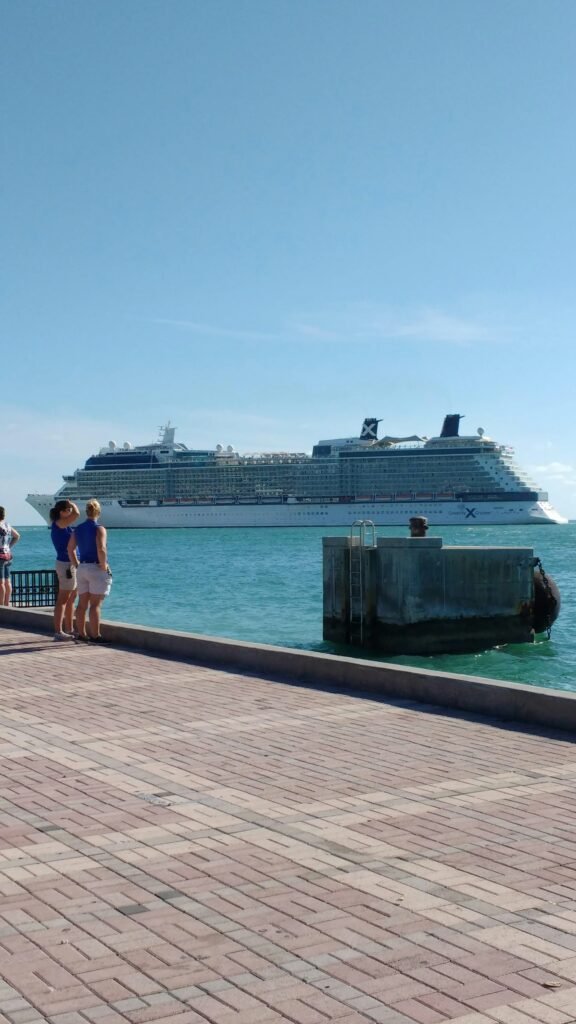
Look, when I first saw the WHO bulletin Monday morning, I had to read it twice. Hantavirus. On a cruise ship. In 2026. That combination of words should not exist. Hantavirus is supposed to be a rodent-and-rural-cabin disease. It is not supposed to be loose on a 17-day polar expedition that crossed half the South Atlantic. But here we are.
The outbreak is centered on the MV Hondius, a Dutch expedition cruise ship operated by Oceanwide Expeditions. The vessel departed Ushuaia, Argentina on April 1 for a route that took it through Antarctica, South Georgia Island, Tristan da Cunha, Saint Helena, and Ascension Island before disembarking passengers in Europe. Somewhere along that itinerary, a hantavirus strain made the jump from rodents to humans. As of this morning, the case count stands at 11, with 9 confirmed and 3 deaths.
Here is what we know, what we do not, and what US travelers should actually do about it.
What Hantavirus Actually Is
Hantavirus is a family of viruses carried mostly by wild rodents. People usually catch it by inhaling dust contaminated with rodent droppings or urine, or by handling rodents directly. In North America, the most familiar strain is Sin Nombre virus, the one behind the 1993 Four Corners outbreak that killed several previously healthy young adults.
The strain involved in this cruise outbreak, according to genetic sequencing released by the World Health Organization, is Andes virus. Andes virus is the most dangerous hantavirus in the Americas, and it is the only one with documented person-to-person transmission, though that mode is rare. It causes hantavirus pulmonary syndrome, a flu-like illness that escalates fast into severe respiratory failure. Case fatality is reported between 30 and 40 percent. That number is brutal, and it tells you why public health officials moved so fast on this one.
How A Cruise Ship Got Infected
Here is the part epidemiologists are still untangling. Hantavirus is not typically a shipboard pathogen. Cruise outbreaks usually mean norovirus, occasionally legionnaires. To get Andes virus aboard a Dutch expedition vessel, you need a rodent reservoir or a contaminated supply that crossed paths with one.
The leading theory, per the Centers for Disease Control investigation team, is that contaminated stores were loaded at one of the South Atlantic stops, most likely the supply transfer at South Georgia Island. South Georgia has a known rodent presence, and the British Antarctic Survey has been running an eradication program there for years that is not yet complete. Eight of the 11 reported cases tracked the same single excursion ashore on South Georgia. That cluster is the strongest signal investigators have.
The Hondius crew has been cooperative, the ship has been quarantined at port, and every cabin is being disinfected. But the rodent angle is going to keep coming up because if Andes virus made it aboard via supply chain, that has implications for every other expedition vessel running South Atlantic routes this season.
The Critical Cases
Among the 11 patients, three have died and several others remain in critical condition in hospitals across Europe and South America. The first fatality was a 64-year-old passenger from the Netherlands who developed symptoms within days of disembarking and deteriorated rapidly despite aggressive care. The second and third deaths followed within 48 hours of each other.
One of the survivors is on extracorporeal membrane oxygenation, or ECMO, which is essentially an artificial lung that takes over while doctors try to give the patient’s body time to fight the infection. ECMO is not a guarantee of recovery, but it is the most aggressive supportive care medicine can offer for severe pulmonary syndrome. The fact that the team activated ECMO this early signals how seriously they are taking the prognosis.
What Public Health Authorities Are Doing
The response has been faster than most cruise-linked outbreaks of the last decade. The World Health Organization issued a Disease Outbreak News alert within 72 hours of the first death. The CDC has activated its Emergency Operations Center to Level 3 and is monitoring American passengers who returned to the United States from the voyage, with health departments in 14 states involved in active surveillance.
The UK Health Security Agency, the European Centre for Disease Prevention and Control, and health authorities in Argentina and Chile are all coordinating. Passengers who disembarked at European ports are being individually traced. Crew members are under medical observation, and the Hondius will not sail again until the CDC and WHO clear the vessel.
Why This Outbreak Is Different
Most hantavirus cases are isolated. A camper, a maintenance worker, somebody who cleaned out a long-shut cabin. Outbreaks above five cases are rare. Eleven cases linked to one vessel, with three deaths, on a high-end international expedition route, is genuinely unusual.
It is also the first major hantavirus outbreak in a maritime setting in the modern era. That novelty alone is why the WHO escalated reporting so quickly. If Andes virus can establish a transient reservoir in a ship’s food stores or galley environment, that changes risk modeling for expedition cruising globally, not just South Atlantic routes. Public-health planners are watching this one closely because the lessons here will rewrite cruise sanitation protocols.
Why This Matters
For American readers, three practical points. First, the immediate risk to the general US public is very low. Hantavirus does not spread casually, and even Andes virus’s documented human-to-human transmission has been limited to close, prolonged contact. You are not at risk from someone who returned from this cruise a week ago and then sat near you at a restaurant.
Second, if you are booked on a South Atlantic expedition cruise in the next 60 days, talk to the operator now. Most major expedition outfits have suspended or modified routes pending CDC guidance, and several have shifted itineraries to skip South Georgia entirely. If you are planning a polar trip later in 2026, watch the CDC Travel Health Notices page closely.
Third, the outbreak underscores how globalization keeps producing pathogen routes that did not exist a generation ago. A rodent in the South Atlantic can now produce hospital cases in 14 US states within three weeks. The same logistical density that powers global commerce also turns local biology into global epidemiology.
USABlaze Takeaway
My honest read on this is that we are early. The case count will probably climb over the next 10 days as latent infections become symptomatic. The CDC will issue a more detailed travel advisory before the weekend. And the cruise industry is going to spend the next six months overhauling South Atlantic supply protocols whether they want to or not.
For now, watch the case count and the genetic-sequencing updates. If WHO finds evidence the strain has mutated for easier transmission, the story changes dramatically. If the case count stays bounded around 15 to 20 over the next two weeks, this stays a serious but contained outbreak. Either way, expedition cruising in the South Atlantic just got a lot more complicated.
Sources: CNN, CIDRAP, UK Health Security Agency, WHO, CDC.
By The USABlaze Editorial Desk
Related Stories From USABlaze
- New York Air Quality Alert 2026: 3 Critical Reasons NYC Avoided the Toxic Top 10 List
- US clears Samsung to ship chipmaking equipment to China under annual rules
- JD Vance and Iran Agreed to a 60-Day Roadmap in Switzerland. Here Is What That Actually Means.
- Ukraine Just Hit Moscow Harder Than Ever, and an Oil Refinery Was the Target