
What We Know
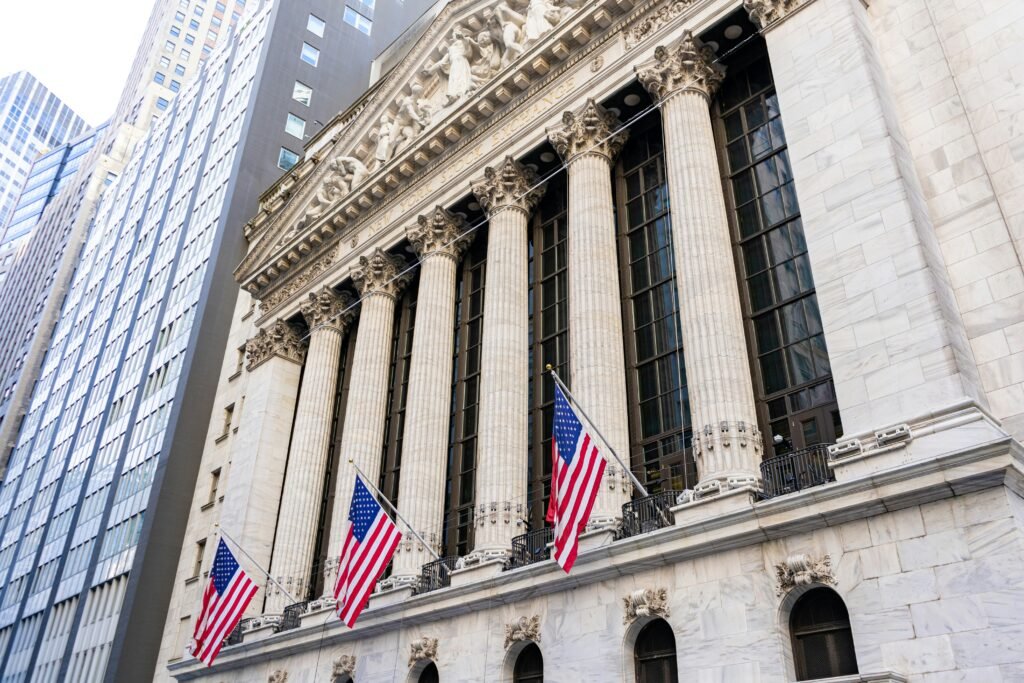
NEW YORK , The U.S. Stock market showed mixed performance this week as investors navigated renewed uncertainty over trade policy and responded to fresh economic signals. Major benchmarks including the S&P 500, Dow Jones Industrial Average and Nasdaq Composite reflected cautious optimism despite ongoing ambiguity surrounding global tariff measures and future trade agreements.
The stock market had previously posted gains after the Supreme Court struck down broad tariffs enacted under emergency trade powers, boosting investor sentiment and lifting key indices at the end of last week. Major technology and consumer stocks, including Alphabet and Amazon, contributed to that advance as investors viewed the ruling as a reduction in immediate downside risks. Nine of the eleven S&P 500 sectors finished higher, indicating broader participation across the market.
However, the outlook shifted earlier this week when President Donald Trump announced the imposition of temporary global tariffs at a 15 percent rate under a different section of the Trade Act. According to reporting from the Associated Press, the renewed tariff action triggered immediate investor caution and weighed on early trading as participants reassessed potential implications for global commerce and corporate costs.
On Monday morning, the stock market reacted quickly. The S&P 500 declined roughly 0.7 percent, while the Dow Jones Industrial Average dropped more than 600 points, or about 1.2 percent. The Nasdaq Composite also slipped approximately 0.7 percent in early trading. These moves reflected uncertainty about the direction of U.S. Trade relations and broader global economic stability.
Investors typically respond cautiously when policy frameworks lack clarity. Trade policy shifts can influence corporate investment decisions, supply chain strategies and long term earnings expectations. Recent commentary from financial analysts suggested that equity index futures signaled a softer open as trade concerns resurfaced alongside mixed corporate earnings outlooks.
On The Ground
Despite the immediate volatility, the U.S. Stock market has demonstrated underlying resilience. Economic fundamentals including steady employment data, consistent consumer spending and corporate earnings stability continue to provide structural support for valuations. These factors often help insulate markets from prolonged downturns even when short term policy changes create temporary instability.
The stock market’s reaction illustrates the complex relationship between trade policy and investor sentiment. While tariff announcements can create near term pressure, broader economic indicators remain central to long term performance expectations. Market participants are balancing potential cost increases from trade measures against ongoing strength in domestic economic activity.
Equity performance has also reflected shifts between risk on and risk off positioning. In recent sessions, gold prices moved higher as investors sought perceived safe havens amid policy uncertainty. At the same time, currency markets showed modest adjustments, with the U.S. Dollar trading within a relatively narrow range as traders weighed central bank signals against evolving trade developments.
Global markets have not reacted uniformly. Some Asian equity indexes advanced following the earlier court ruling that limited certain tariff measures. Technology and semiconductor firms contributed to gains as investors recalibrated expectations for global growth prospects.
European equities, however, edged lower in recent sessions as renewed uncertainty surrounding U.S. Trade policy influenced investor behavior. Reuters reported that heightened trade concerns pressured major European benchmarks including Germany’s DAX, highlighting the broader international sensitivity to developments in U.S. Policy decisions.
The Real-World Fallout
Sector specific performance within the stock market has also played a role. Earlier this week, major technology shares supported index gains, with Nvidia contributing positively to overall momentum. Investors appear to be balancing trade related headwinds with optimism surrounding innovation driven earnings growth.
The Federal Reserve remains an important factor shaping the broader environment. With inflation showing signs of moderation yet remaining above long term targets, policymakers have maintained a measured approach toward interest rate adjustments. Stability in monetary policy can help reduce financing uncertainty for businesses while markets assess the potential economic impact of trade changes.
Even as global economic indicators present mixed signals, the U.S. Stock market continues to display adaptability. Diversified portfolios, improved corporate balance sheets and enhanced risk management strategies may be contributing to this resilience compared with prior periods of sharper volatility.
Investors monitoring the stock market in 2026 are emphasizing disciplined strategies and close attention to policy announcements. While trade policy uncertainty remains a key influence on short term fluctuations, longer term performance continues to be shaped by earnings growth, macroeconomic data and monetary policy stability.
Frequently Asked Questions
The Road From Here
Why is the stock market reacting to trade policy changes?
Trade policy can directly influence corporate costs, global supply chains and international revenue streams. When tariff measures shift, investors reassess earnings expectations, which can affect overall market pricing.
What are the main indexes to watch in the stock market?
The S&P 500, Dow Jones Industrial Average and Nasdaq Composite are the primary benchmarks used to measure overall market performance across sectors.
What does stock market resilience mean?
Resilience refers to the ability of the market to absorb short term shocks without experiencing sustained declines, often supported by strong economic fundamentals.
How can investors navigate stock market uncertainty?
Diversification, long term planning and close monitoring of economic indicators can help investors manage volatility during periods of policy uncertainty.
Where can real time stock market data be found?
Real time index data is available through major financial news platforms and official exchange websites such as the New York Stock Exchange and Nasdaq.
Why This Matters
U.S. Stock Market Today in 2026 is a textbook example of how market sentiment reshapes US business strategy. Boards across the Fortune 500 are quietly running the same math.
USABlaze Takeaway
Reported and analyzed by the USABlaze editorial team. Last updated 2026-02-23. Have a tip or correction? Send us a message or read our editorial policy.