
The Key Facts
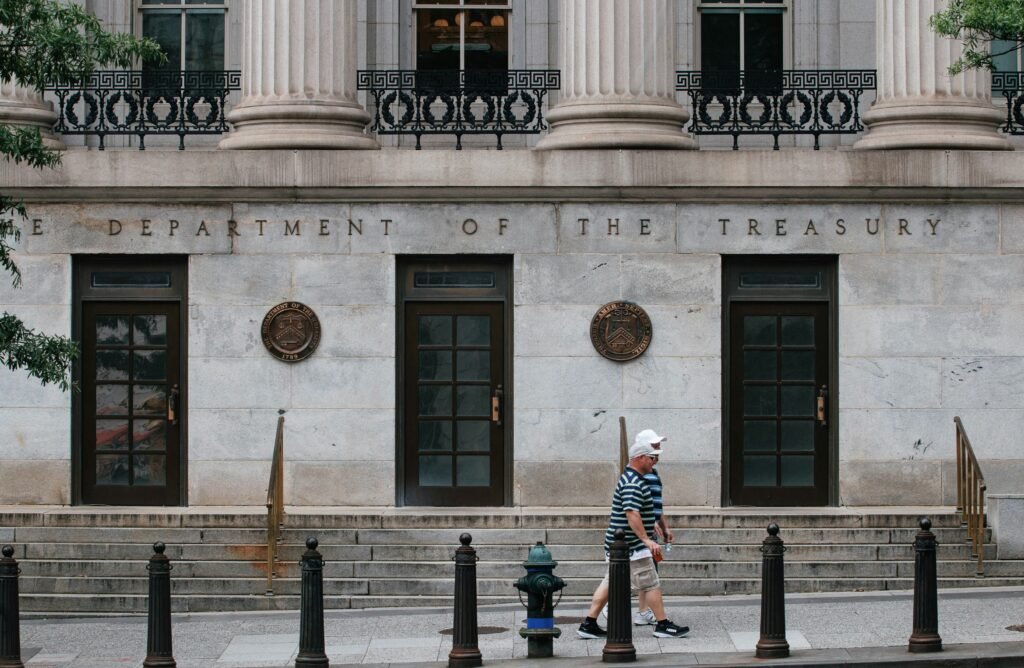
US Treasury AI Initiative entered a new phase in February 2026 as federal officials introduced a coordinated effort to strengthen cybersecurity protections across the American financial system. The United States Department of the Treasury confirmed it will release a structured package of resources aimed at helping financial institutions manage artificial intelligence related operational and cyber risks while preserving market stability. The US Treasury AI Initiative represents one of the most deliberate federal responses to the rapid expansion of AI technologies within capital markets.
Artificial intelligence is now deeply integrated into modern finance. It supports fraud detection systems, credit scoring models, liquidity forecasting tools, compliance monitoring programs, and automated trading infrastructure. These systems process massive volumes of transactional and behavioral data every second. As AI adoption accelerates across banks, asset managers, and payment networks, policymakers are placing increased emphasis on ensuring that digital safeguards evolve alongside technological capability.
US Treasury AI Initiative Strengthens Financial Security
Machine learning systems operate at the center of financial infrastructure. Major banks deploy advanced analytical models to monitor millions of transactions daily, identifying suspicious patterns and preventing fraud in real time. Asset managers rely on algorithmic tools to evaluate volatility across equity, fixed income, and commodity markets. High speed trading platforms execute transactions within milliseconds based on automated pricing logic.
With this level of integration comes greater responsibility. Treasury officials have emphasized that AI systems depend on accurate datasets, secure cloud environments, and well governed internal controls. If data integrity is compromised or oversight mechanisms are insufficient, operational continuity could be affected. The US Treasury AI Initiative seeks to reduce such vulnerabilities through structured guidance rather than reactive enforcement.
The full federal announcement detailing the initiative can be reviewed on the U.S. Department of the Treasury official website, where officials outline the release of six resources throughout February to guide responsible AI deployment in financial services.
Structured Risk Management Approach
Behind The Numbers
Treasury leaders described the US Treasury AI Initiative as a collaborative effort developed alongside financial institutions, regulatory agencies, and cybersecurity professionals. Instead of imposing immediate regulatory mandates, the framework focuses on strengthening governance standards and reinforcing risk management practices already in place across the industry.
Institutions are encouraged to evaluate how artificial intelligence systems are designed, validated, deployed, and supervised. This includes reviewing model validation processes, vendor oversight procedures, data integrity controls, and ongoing monitoring frameworks. By embedding these practices within existing supervisory structures, regulators aim to maintain innovation while reducing systemic exposure.
Independent reporting from Bloomberg Law confirmed that the initiative is intended to help financial firms manage cybersecurity risks associated with advanced AI tools while maintaining operational resilience. The coverage emphasized the cooperative nature of the guidance and its alignment with long term financial stability objectives.
Artificial Intelligence and Market Stability
American financial markets process trillions of dollars in transactions during each trading session. Retail payment networks transfer funds between institutions and consumers in real time. Automated models influence liquidity management, underwriting decisions, capital allocation strategies, and compliance workflows across the economy.
Treasury officials are framing AI related risk through the lens of financial stability. While artificial intelligence enhances efficiency and analytical precision, interconnected digital systems can amplify weaknesses if governance standards are inconsistent. The US Treasury AI Initiative encourages institutions to examine how AI integration interacts with payment rails, clearing systems, and settlement platforms that form the backbone of market operations.
Cybersecurity assessments have shown that malicious actors increasingly use automation to scale phishing campaigns and identity based fraud schemes. Financial institutions must therefore deploy AI defensively while safeguarding their own infrastructure from misuse. This dual dynamic reinforces the need for disciplined oversight and layered security controls.
The Real-World Fallout
Operational Oversight and Institutional Preparedness
The US Treasury AI Initiative signals that artificial intelligence governance is becoming a core component of supervisory dialogue. Financial institutions may expand board level reporting on algorithmic oversight, enhance documentation surrounding model development practices, and conduct periodic internal audits to strengthen accountability.
Operational resilience planning is central to the guidance. Institutions are encouraged to stress test AI dependent systems, refine contingency procedures, and strengthen incident response capabilities. The objective is not to slow technological adoption but to ensure continuity under adverse conditions.
Regional and mid sized banks may encounter implementation challenges that differ from those faced by large national institutions with established cybersecurity teams. Regulators have indicated that scalable governance models can be adapted according to institutional complexity and operational scope.
Coordination Between Government and Industry
A defining feature of the February 2026 announcement is structured coordination between federal agencies and private sector stakeholders. Treasury representatives collaborated with banking leaders and technical experts to develop recommendations grounded in operational realities.
This cooperative model seeks to promote consistency across the financial ecosystem without introducing abrupt structural shifts. Financial institutions are expected to integrate the released resources into existing compliance and risk management programs rather than treat AI oversight as a separate function. Early coordination allows regulators and industry participants to anticipate emerging vulnerabilities before they escalate.
What Happens Next
You may also reference previous financial technology coverage published on USABlaze to provide additional context and create internal linking strength within your site.
Investor Confidence and Economic Security
Investor confidence remains foundational to orderly financial markets. Automated decision systems influence capital flows across equities, bonds, derivatives, and alternative investments. Transparent governance standards and disciplined cybersecurity practices reinforce trust in digital financial infrastructure.
Treasury officials have linked AI resilience to broader national economic security priorities. Financial networks are categorized as critical infrastructure within federal policy frameworks. Disruptions to these systems could affect payment processing, corporate financing channels, consumer credit availability, and overall economic activity.
Artificial intelligence offers measurable benefits in fraud prevention, compliance efficiency, and operational optimization. Responsible oversight ensures that these advantages are sustained without increasing systemic exposure.
The US Treasury AI Initiative represents a measured step toward integrating artificial intelligence governance within national financial policy. Rather than reacting to a specific disruption, federal authorities are reinforcing safeguards as adoption expands across the financial sector.
As the US Treasury AI Initiative continues to unfold throughout February 2026, financial institutions are expected to review governance structures carefully and incorporate recommended practices into their operational frameworks. Artificial intelligence will continue shaping payment systems, capital markets, and consumer banking services. By aligning cybersecurity standards with AI development practices, regulators aim to preserve market stability while supporting responsible technological progress across the American financial system.
Why This Matters
Cybersecurity and Artificial Intelligence Converge in Finance is a case study in what happens when the AI economy meets a market that’s no longer forgiving of half-measures. The fallout reaches beyond the headline.
USABlaze Takeaway
The story isn’t over. Cybersecurity and Artificial Intelligence Converge in Finance is one of those moments where the second-day reporting matters more than the first-day headline. We’ll be on it.
Reported and analyzed by the USABlaze editorial team. Last updated 2026-02-19. Have a tip or correction? Send us a message or read our editorial policy.
Related Stories From USABlaze
- China’s ShengShu Raises $293 Million as Global AI Race Shifts Beyond Chatbots to Real-World Intelligence Systems
- Major U.S. Cybersecurity Alert as Banks and Federal Agencies Strengthen Defenses in 2026
- China Iran War Edge: Pentagon Intelligence Report Sounds Alarm
- AI Stocks Had an Extraordinary Year. Now the Market Is Asking the Hard Question.